Insulated, Impacted, & Influencer Deeper Dive Exploration Lesson Three: Influencer for God by God’s love, grace, mercy, truth, and power
Chapter 3: Insulated, Impacted, & Influencer let’s dig in and learn more
Lesson Three: Influencer for God by God’s Love, Grace, Mercy, Truth, and Power
Food for Thought:Embracing Influence: Esther, Abigail, and Ruth as Champions of Change
In a world increasingly shaped by cancel culture, the stories of Esther, Abigail, and Ruth resonate deeply. These courageous women defied societal norms of their time and were influenced by God’s word to step into pivotal roles where their faith was tested and their actions shifted crisis situations.
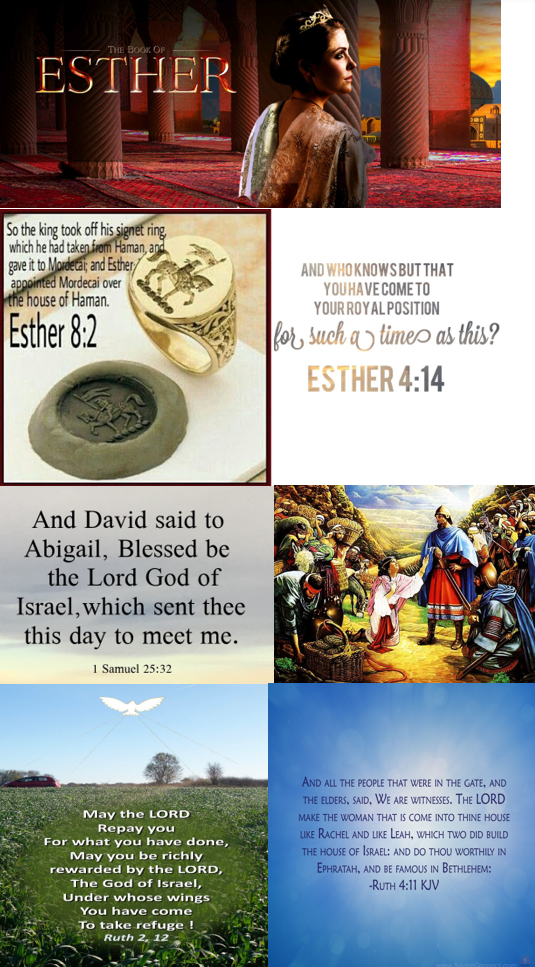
Esther, risking her life to advocate for her people before King Xerxes, exemplifies boldness in the face of danger (Esther 4:14). Abigail, intervening to prevent bloodshed and wisely negotiating peace, shows us the power of diplomacy and righteousness (1 Samuel 25:32-33). Ruth, leaving her homeland to care for Naomi and ultimately becoming an ancestor of Jesus, embodies loyalty, compassion, and faithfulness (Ruth 1:16-17).
These women’s stories teach us profound lessons about using our influence with intention and purpose. Despite the risks and challenges, they chose to be change agents for good, impacting their communities and leaving a lasting legacy.
Scripture:
Let’s reflect on Proverbs 31:25-26 (NIV): “She is clothed with strength and dignity; she can laugh at the days to come. She speaks with wisdom, and faithful instruction is on her tongue.”
This scripture highlights the qualities of a woman of strength and wisdom, traits exemplified by Esther, Abigail, and Ruth. It reminds us that as we are influenced by God’s word and His principles, we can confidently influence others with grace, wisdom, and integrity.
In our modern context, where cancel culture often seeks to silence voices and restrict influence, let us be inspired by these biblical heroines. Let’s embrace God’s word, allowing it to shape our actions and attitudes, and let’s purposefully use our influence to bring positive change to those around us. As we do so, we can leave a legacy of faith, compassion, and transformation—a legacy that echoes God’s love and grace in our world today.
Amen Indeed.
Opening Introduction:
In this final chapter of our exploration, we delve into the lives of three remarkable women: Esther, Abigail, and Ruth—each a shining example of how God uses ordinary individuals to accomplish extraordinary purposes. Their stories resonate across generations, revealing profound truths about courage, faithfulness, and the transformative power of God’s love, grace, mercy, truth, and power.
As we journey through these narratives, we will uncover timeless lessons on what it means to be influencers for God in our contemporary world. These women were not insulated from challenges or hardships but were deeply impacted by their faith in God, which enabled them to rise above circumstances and influence their communities for His glory.
Join us as we explore how their lives continue to inspire and guide us today, reminding us of the eternal impact we can make when we surrender our lives to God and allow His love to work through us. May their stories ignite a passion within us to live as influencers—empowered by God’s love, grace, mercy, truth, and power—in every sphere of our lives.
In this chapter, we explore the compelling stories of three influential women from the Bible: Esther, Abigail, and Ruth. These women exemplify courage, wisdom, and faithfulness in different circumstances, each becoming a powerful influencer through God’s guidance and providence. Their stories inspire us to consider how we too can be influencers for God’s kingdom in our daily lives.
General Overview: Sharing Chapter 3 Influencer in the Bible
As we embark on a journey through the lives of Esther, Abigail, and Ruth, we discover how God’s Word and their devotion to Him created powerful testimonies. These women were not just historical figures; they were influencers of truth and righteousness in their time, setting examples that resonate with us today. By examining their stories, we gain insights into how God can use ordinary people to accomplish extraordinary things for His glory.
Deeper Dive Synopsis of the Three Bible Story Lessons
Lesson 1: Esther
Esther’s story unfolds during a time of great peril for her people, the Jews, in ancient Persia. Through courage and strategic wisdom, Esther rises from obscurity to become queen and ultimately saves her people from destruction. Her obedience to God’s calling, even at great personal risk, demonstrates how God uses individuals to fulfill His purposes of deliverance and justice.
Lesson 2: Abigail
Abigail’s narrative in 1 Samuel 25 showcases her intelligence and bravery in diffusing a potentially disastrous situation involving her husband Nabal and David, who would become king. Her humility, quick thinking, and unwavering faith in God’s sovereignty not only prevented bloodshed but also secured blessings and favor from David. Abigail’s story teaches us about the power of wisdom, humility, and faithfulness in navigating difficult circumstances.
Lesson 3: Ruth
Ruth’s loyalty and devotion to her mother-in-law Naomi are celebrated in the book of Ruth. Despite facing loss and uncertainty, Ruth chooses to remain faithful and accompany Naomi back to Bethlehem. Her commitment to Naomi and her willingness to embrace Naomi’s God lead to unexpected blessings, including her marriage to Boaz and becoming an ancestor of King David. Ruth’s story illustrates the rewards of faithfulness, perseverance, and trusting in God’s providence.
As you review these lessons consider the following…
In reflecting on the stories of Esther, Abigail, and Ruth, we discover timeless truths and lessons that resonate with us in the 21st century. These women were influencers not because of their own strength or wisdom alone, but because they allowed God to work through them. They remind us that:
Courage and Obedience: Like Esther, we are called to courageously obey God’s call, even when it requires stepping out of our comfort zones.
Wisdom and Humility: Abigail’s story teaches us the importance of wisdom and humility in resolving conflicts and seeking God’s favor.
Faithfulness and Providence: Ruth exemplifies faithfulness and trust in God’s providence, showing us that our loyalty to Him yields abundant blessings.
These women were influencers because they aligned their lives with God’s purposes, impacting their families, communities, and future generations. Their stories challenge us to consider how we too can become influencers of truth and righteousness in all aspects of our lives.
Prayer
Heavenly Father,
As we conclude or lessons relating to being an influencer taking account an overview of our study of Esther, Abigail, and Ruth, we are in awe of Your faithfulness and grace revealed through their lives. Thank You for their inspiring examples of courage, wisdom, and faithfulness. May their stories not only inform but transform us, empowering us to be influencers of Your kingdom wherever You have placed us.
Grant us the courage to obey Your call, the wisdom to navigate challenges with humility, and the faithfulness to trust in Your providence. Help us to walk in the footsteps of Esther, Abigail, and Ruth, shining Your light in our families, workplaces, and communities.
May Your Word dwell richly in us so that we may impact others with Your truth and love. Use us, Lord, as vessels of Your grace and instruments of Your peace. In Jesus’ name, Amen.
Chapter 3: Influencers for God Through God
Lesson 1: Esther – A Woman of Courage and Destiny
Opening Prayer
Heavenly Father,
As we gather to study the story of Esther, we come before You with hearts open to learn how to be influencers for Your kingdom in our daily lives. May Esther’s courage, faith, and obedience inspire us to trust in Your providence and act boldly for Your purposes. Guide us through this study, that we may grow in wisdom and understanding of Your Word. In Jesus’ name, Amen.
Scripture (Esther 1:1-2:18 ESV)
Esther 1:1-2:18 (ESV):
“In the days of Ahasuerus, the Ahasuerus who reigned from India to Ethiopia over 127 provinces, in those days when King Ahasuerus sat on his royal throne in Susa, the citadel, in the third year of his reign he gave a feast for all his officials and servants. The army of Persia and Media and the nobles and governors of the provinces were before him, while he showed the riches of his royal glory and the splendor and pomp of his greatness for many days, 180 days. And when these days were completed, the king gave for all the people present in Susa, the citadel, both great and small, a feast lasting for seven days in the court of the garden of the king’s palace. There were white cotton curtains and violet hangings fastened with cords of fine linen and purple to silver rods and marble pillars, and also couches of gold and silver on a mosaic pavement of porphyry, marble, mother-of-pearl, and precious stones. Drinks were served in golden vessels, vessels of different kinds, and the royal wine was lavished according to the bounty of the king. And drinking was according to this edict: ‘There is no compulsion.’ For the king had given orders to all the staff of his palace to do as each man desired. Queen Vashti also gave a feast for the women in the palace that belonged to King Ahasuerus.
On the seventh day, when the heart of the king was merry with wine, he commanded Mehuman, Biztha, Harbona, Bigtha and Abagtha, Zethar and Carkas, the seven eunuchs who served in the presence of King Ahasuerus, to bring Queen Vashti before the king with her royal crown, in order to show the peoples and the princes her beauty, for she was lovely to look at. But Queen Vashti refused to come at the king’s command delivered by the eunuchs. At this the king became enraged, and his anger burned within him.
Then the king said to the wise men who knew the times (for this was the king’s procedure toward all who were versed in law and judgment, the men next to him being Carshena, Shethar, Admatha, Tarshish, Meres, Marsena, and Memucan, the seven princes of Persia and Media, who saw the king’s face, and sat first in the kingdom): ‘According to the law, what is to be done to Queen Vashti, because she has not performed the command of King Ahasuerus delivered by the eunuchs?’ Then Memucan said in the presence of the king and the officials, ‘Not only against the king has Queen Vashti done wrong, but also against all the officials and all the peoples who are in all the provinces of King Ahasuerus. For the queen’s behavior will be made known to all women, causing them to look at their husbands with contempt, since they will say, “King Ahasuerus commanded Queen Vashti to be brought before him, and she did not come.” This very day the noble women of Persia and Media who have heard of the queen’s behavior will say the same to all the king’s officials, and there will be contempt and wrath in plenty. If it please the king, let a royal order go out from him, and let it be written among the laws of the Persians and the Medes so that it may not be repealed, that Vashti is never again to come before King Ahasuerus. And let the king give her royal position to another who is better than she. So when the decree made by the king is proclaimed throughout all his kingdom, for it is vast, all women will give honor to their husbands, high and low alike.’ This advice pleased the king and the princes, and the king did as Memucan proposed. He sent letters to all the royal provinces, to every province in its own script and to every people in its own language, that every man be master in his own household and speak according to the language of his people.”
After these things, when the anger of King Ahasuerus had abated, he remembered Vashti and what she had done and what had been decreed against her. Then the king’s young men who attended him said, ‘Let beautiful young virgins be sought out for the king. And let the king appoint officers in all the provinces of his kingdom to gather all the beautiful young virgins to the harem in Susa the citadel, under custody of Hegai, the king’s eunuch, who is in charge of the women. Let their cosmetics be given them. And let the young woman who pleases the king be queen instead of Vashti.’ This pleased the king, and he did so.
Now there was a Jew in Susa the citadel whose name was Mordecai, the son of Jair, son of Shimei, son of Kish, a Benjaminite, who had been carried away from Jerusalem among the captives carried away with Jeconiah king of Judah, whom Nebuchadnezzar king of Babylon had carried away. He was bringing up Hadassah, that is Esther, the daughter of his uncle, for she had neither father nor mother. The young woman had a beautiful figure and was lovely to look at, and when her father and her mother died, Mordecai took her as his own daughter. So when the king’s order and his edict were proclaimed, and when many young women were gathered in Susa the citadel in custody of Hegai, Esther also was taken into the king’s palace and put in custody of Hegai, who had charge of the women. And the young woman pleased him and won his favor. And he quickly provided her with her cosmetics and her portion of food, and with seven chosen young women from the king’s palace, and advanced her and her young women to the best place in the harem. Esther had not made known her people or kindred, for Mordecai had commanded her not to make it known. And every day Mordecai walked in front of the court of the harem to learn how Esther was and what was happening to her.
Now when the turn came for each young woman to go in to King Ahasuerus, after being twelve months under the regulations for the women, since this was the regular period of their beautifying, six months with oil of myrrh and six months with spices and ointments for women—when the young woman went in to the king in this way, she was given whatever she desired to take with her from the harem to the king’s palace. In the evening she would go in, and in the morning she would return to the second harem in custody of Shaashgaz, the king’s eunuch, who was in charge of the concubines. She would not go in to the king again, unless the king delighted in her and she was summoned by name.
When the turn came for Esther the daughter of Abihail the uncle of Mordecai, who had taken her as his own daughter, to go in to the king, she asked for nothing except what Hegai the king’s eunuch, who had charge of the women, advised. Now Esther was winning favor in the eyes of all who saw her. And when Esther was taken to King Ahasuerus, into his royal palace, in the tenth month, which is the month of Tebeth, in the seventh year of his reign, the king loved Esther more than all the women, and she won grace and favor in his sight more than all the virgins, so that he set the royal crown on her head and made her queen instead of Vashti. Then the king gave a great feast for all his officials and servants; it was Esther’s feast. He also granted a remission of taxes to the provinces and gave gifts with royal generosity.
Now when the virgins were gathered together the second time, Mordecai was sitting at the king’s gate. Esther had not made known her kindred or her people, as Mordecai had commanded her, for Esther obeyed Mordecai just as when she was brought up by him. In those days, as Mordecai was sitting at the king’s gate, Bigthan and Teresh, two of the king’s eunuchs, who guarded the threshold, became angry and sought to lay hands on King Ahasuerus. And this came to the knowledge of Mordecai, and he told it to Queen Esther, and Esther told the king in the name of Mordecai. When the affair was investigated and found to be so, the men were both hanged on the gallows. And it was recorded in the book of the chronicles in the presence of the king.”
Story Narrative: Esther – A Timeless Tale of Faith and Courage
In the ancient kingdom of Persia, King Xerxes ruled from his magnificent palace in Susa. During his reign, a decree was issued that threatened the existence of the Jewish people throughout the empire. Among them was Esther, an orphan raised by her cousin Mordecai. Little did she know that her destiny would soon intertwine with the fate of her people.
Esther, known for her beauty and grace, was chosen to participate in a royal beauty pageant and eventually crowned queen of Persia. Meanwhile, Mordecai, positioned at the king’s gate, uncovered a plot to assassinate Xerxes, which he promptly reported, earning the king’s favor.
Yet, the joy of Esther’s newfound position was soon overshadowed by grave news. Haman, the king’s vizier, harbored deep animosity towards Mordecai and devised a sinister plan to annihilate all Jews in the kingdom. Mordecai urged Esther to intercede with the king on behalf of her people, despite the peril it posed to her own life.
Esther, recognizing the magnitude of the task before her, called for a period of fasting and prayer among the Jews. Strengthened by their support and her unwavering faith, she approached the king unsummoned—a perilous act punishable by death. Yet, moved by Esther’s courage and beauty, Xerxes extended his golden scepter, granting her audience.
In a series of banquets, Esther strategically revealed Haman’s scheme to Xerxes, who, incensed by the betrayal, ordered Haman’s demise. By God’s providence, Esther’s people were spared, and Haman’s decree was overturned. Mordecai was honored, and Jews throughout the empire rejoiced, celebrating the Feast of Purim—a testament to God’s faithfulness and deliverance.
Key Concepts with Definitions and Symbolisms
Influencer: A person who affects the character, development, or behavior of others.
Courage (Greek: θάρρος – tharros): The ability to confront fear, pain, danger, uncertainty, or intimidation.
Faith (Hebrew: אֱמוּנָה – emunah): Complete trust or confidence in someone or something, especially without evidence or proof.
Providence (Greek: πρόνοια – pronoia): The protective care of God or of nature as a spiritual power.
Sovereignty (Hebrew: רֹאשׁ – ro’sh): Supreme power or authority.
Deliverance (Greek: σωτηρία – soteria): The action of being rescued or set free.
C.P.R. + N.O.W. Moment: Crisis, Pivot, Rebirth, New Beginnings
Crisis: Esther faced a crisis when she learned of Haman’s plot to annihilate the Jewish people (Esther 4:4-6).
Pivot: Instead of succumbing to fear, Esther pivoted towards faith and took action by approaching the king (Esther 4:15-16).
Rebirth: Esther experienced a rebirth of purpose as she embraced her role in delivering her people from destruction (Esther 7:3-6).
New Beginnings: Through Esther’s courage and God’s providence, new beginnings were realized as the Jews were spared and celebrated (Esther 9:20-22).
Reflection Q and A
Q: How did Esther’s obedience to God’s call impact the fate of her people?
A: Esther’s obedience led to the salvation of the Jewish people from annihilation, demonstrating God’s faithfulness in preserving His chosen people (Esther 4:14). See also Hebrews 11:8-12 for faith and obedience.
Q: What lessons can we learn from Esther’s courage in approaching the king unsummoned?
A: Esther’s courage teaches us the importance of trusting in God’s providence and taking bold steps when called to act for His purposes (Esther 4:16). Reflect on Joshua 1:9 and Matthew 19:26 for examples of trusting God’s plan.
Q: How can we apply Esther’s example of strategic wisdom and faith in our own lives today?
A: Esther’s story challenges us to rely on prayer, seek God’s guidance, and act courageously in the face of adversity, knowing that He can use us for His kingdom purposes (Esther 4:15). Refer to Proverbs 3:5-6 and James 1:5 for wisdom and guidance.
Walking in Esther’s Shoes: Influenced by God for God
Esther’s life offers timeless lessons on how we can be influencers in our contemporary world, inspired and empowered by God’s guidance and grace. Here’s how we can walk in Esther’s shoes today, embodying her example of courage, advocacy, wisdom, prayerfulness, patience, and purposeful living:
Courageous Faith and Trust: Esther’s courageous faith in approaching King Xerxes, risking her life to advocate for her people, inspires us to trust in God’s providence. Today, we can emulate her boldness by stepping out in faith, knowing that God places us where we are for a purpose. Whether it’s speaking up for justice, defending the marginalized, or sharing our faith, we can influence others by relying on God’s strength.
Advocacy and Compassion: Esther’s advocacy for the Jewish people teaches us the importance of standing up for others who face injustice. In our communities and workplaces, we encounter opportunities to advocate for fairness, equality, and compassion. By using our influence to support those in need and speak against discrimination, we reflect God’s heart for justice and demonstrate His love to others.
Wisdom in Decision-Making: Esther’s strategic approach in planning her actions and seeking wise counsel from Mordecai shows us the value of wisdom in decision-making. As influencers, we can seek God’s wisdom through prayer, Scripture, and wise counsel, making decisions that honor God and benefit others. By making thoughtful choices rooted in biblical principles, we can positively impact our spheres of influence.
Prayerful Dependence on God: Before approaching the king, Esther called for prayer and fasting, demonstrating her dependence on God’s guidance and power. In our lives today, prayer and fasting deepen our relationship with God, aligning our hearts with His will and empowering us to be effective influencers. By committing to regular prayer and seeking God’s direction, we invite His transformative work in our lives and influence.
Trusting God’s Timing: Esther’s patience in waiting for the right moment to approach the king reminds us to trust in God’s perfect timing. As influencers, we may face challenges, setbacks, or delays, but Esther’s example encourages us to remain steadfast in faith. By trusting God’s timing and remaining obedient to His leading, we position ourselves to fulfill His purposes and impact others for His kingdom.
Living with Purpose and Integrity: Esther’s life exemplifies living with purpose, integrity, and humility before God and others. As influencers for God, we are called to live authentically, reflecting His love, grace, and truth in all we do. Whether in our relationships, professions, or communities, our lives can testify to God’s transformative power and draw others closer to Him. By living out our faith with consistency and conviction, we glorify God and fulfill our role as influencers in our world today.
In walking in Esther’s shoes influenced by God for God, we are challenged to embody courage, advocacy, wisdom, prayerfulness, patience, and purposeful living. By aligning our lives with biblical principles and relying on God’s strength, we can effectively influence our world for His kingdom and bring glory to His name.
Closing: Influence by God – Lessons for Today
Esther’s story resonates with us today as a powerful reminder of God’s faithfulness and sovereignty. Her courage, faith, and strategic wisdom serve as an example of how we can influence our communities and spheres of influence for God’s kingdom. May we, like Esther, trust in God’s providence, act boldly in obedience to His call, and impact others with His truth and love.
Ending Prayer
Heavenly Father,
As we reflect on Esther’s courage and faithfulness, we thank You for her example of unwavering trust in Your providence. Empower us, like Esther, to be influencers for Your kingdom, trusting in Your guidance and sovereignty in all circumstances. Grant us courage to act boldly, wisdom to discern Your will, and faith to believe in Your promises. May Your Word dwell richly in us, transforming our lives and impacting those around us for Your glory. In Jesus’ name, Amen.
As we delve deeper into the story of Abigail, we come before You seeking wisdom and understanding. Open our hearts to receive the lessons You have for us through her life. Help us to grasp the importance of wisdom, courage, and compassion in influencing others for Your kingdom. May we learn to walk in Abigail’s footsteps, guided by Your word and empowered by Your Spirit. In Jesus’ name, Amen.
Scripture:
Let us begin by reflecting on 1 Samuel 25:32-33 (NIV): “David said to Abigail, ‘Praise be to the Lord, the God of Israel, who has sent you today to meet me. May you be blessed for your good judgment and for keeping me from bloodshed this day and from avenging myself with my own hands.’”
This scripture captures the pivotal moment when Abigail intervened with wisdom and courage to prevent David from taking revenge. Her actions not only saved lives but also demonstrated her influence for God’s purposes.
Story Narrative:
In the hills of Maon, there lived a woman named Abigail, married to a man named Nabal. Abigail was known for her intelligence, beauty, and wise judgment. Her husband, Nabal, however, was harsh and mean-spirited, earning his wealth through questionable means. Despite his character flaws, Abigail remained a faithful and prudent wife.
One day, David, who was on the run from King Saul and his soldiers, came to the region near Maon. David’s men had provided protection to Nabal’s shepherds and flocks, ensuring their safety from harm. In return, David sent messengers to Nabal requesting provisions and supplies for his men. However, Nabal responded rudely and insolently to David’s request, refusing to acknowledge the kindness shown by David’s men.
When David received Nabal’s disrespectful response, he was furious and vowed to take vengeance on Nabal and his household. He gathered his armed men, intending to repay Nabal’s wickedness with bloodshed. Meanwhile, one of Nabal’s servants, who knew of Abigail’s intelligence and good judgment, hurried to her and informed her of the impending danger.
Upon hearing the news, Abigail immediately took action. She prepared a generous offering of food, wine, and other provisions, enough for David and his entire band of men. She loaded the supplies onto donkeys and set out to intercept David before he could reach Nabal’s household. Accompanied by a few of her servants, Abigail rode swiftly towards David, her heart heavy with concern for her family and her people.
As Abigail approached David and his men, she dismounted from her donkey and fell at David’s feet, her face bowed to the ground. With humility and respect, she addressed David, pleading for his forgiveness and mercy. She acknowledged David’s rightful place as the future king of Israel and appealed to his sense of justice and honor.
“Please forgive your servant’s offense,” Abigail implored. “I did not know about the message your men brought. May my lord pay no attention to that wicked man Nabal. He is just as his name says—’Fool’—and folly goes with him.”
Abigail continued to speak with wisdom and discernment, using her words to calm David’s anger and turn him away from his vengeful intentions. She reminded David that God would establish his kingdom and bless him abundantly, urging him not to stain his hands with bloodshed. Her words resonated deeply with David, reminding him of God’s plans and purposes for his life.
David was deeply moved by Abigail’s courage, wisdom, and humility. He praised God for sending Abigail to meet him and prevent him from committing a grave sin. David accepted Abigail’s generous offering and her words of wisdom, realizing that God had intervened to save him from a destructive path.
“May you be blessed for your good judgment and for keeping me from bloodshed this day,” David said to Abigail. “Praise be to the Lord, the God of Israel, who has sent you today to meet me. Your wisdom and courage have saved us all from great harm.”
David instructed his men to turn back and return to their camp, leaving Nabal and his household unharmed. Abigail returned to her home, her heart filled with gratitude and relief. When she arrived, Nabal was feasting and drinking, completely unaware of the danger that had threatened his life.
The next morning, Abigail informed Nabal of the danger they had narrowly escaped. Shocked and overcome with fear, Nabal’s heart failed him, and he became like a stone. Ten days later, the Lord struck Nabal, and he died.
Upon hearing of Nabal’s death, David sent word to Abigail, asking her to become his wife. Abigail willingly accepted David’s proposal, and she became his wife, joining him in his journey as the future king of Israel.
Key Concepts with Definitions:
Influencer (Literal Definition): Someone who has the power to affect decisions, actions, and opinions of others.
Wisdom (Hebrew – Chokmah): The ability to discern and apply knowledge, experience, and understanding effectively.
Integrity: Steadfast adherence to a strict moral or ethical code, demonstrated by honesty and truthfulness in actions and words.
Compassion: Deep awareness of the suffering of others, coupled with a desire to alleviate it.
Crisis Management: The process by which an individual or organization deals with a sudden, unexpected event that threatens to disrupt their normal operations.
Pivot: To change direction or course, especially in response to a new or unexpected situation.
Reconciliation: The restoration of friendly relations, bringing harmony and healing to strained or broken relationships.
Witness (Greek – Martus): A person who testifies to the truth of God’s work and presence.
C.P.R. + N.O.W. Moment:
Abigail’s encounter with David embodies a profound Crisis, Pivot, Rebirth moment:
Crisis: Nabal’s refusal to aid David posed a grave threat, prompting David’s intention to retaliate with violence.
Pivot: Abigail swiftly intervened, bringing a gift of peace and wisdom, thereby altering the course of events.
Rebirth: David recognized Abigail’s influence and God’s guidance, leading to reconciliation and averted disaster.
New Beginnings: Abigail’s actions strengthened David’s resolve to honor God in his future leadership.
Reflection Q and A:
Q: How did Abigail’s intervention demonstrate her influence and wisdom?
A: Abigail’s swift action and diplomacy prevented bloodshed and demonstrated her influence in diffusing a volatile situation (1 Samuel 25:32-33).
Q: What lessons can we learn from Abigail’s character and actions?
A: Abigail teaches us the power of wisdom, compassion, and courage in influencing positive outcomes and maintaining integrity (Proverbs 31:26).
Q: How can we apply Abigail’s example to our own lives today?
A: Like Abigail, we can use our influence to promote peace, reconcile relationships, and act with integrity in challenging situations (Matthew 5:9).
Additional Q and A:
Q: In what ways can we demonstrate compassion and wisdom in conflict resolution, similar to Abigail’s actions?
A: Reflect on Proverbs 15:1, which emphasizes the importance of a gentle answer turning away wrath, and consider practical ways to apply this principle in your interactions.
Q: How can we maintain integrity and honor God in situations where our influence is challenged or disregarded?
A: Meditate on Psalm 25:21, which speaks of integrity and uprightness protecting those who trust in God, and seek His guidance in navigating challenging circumstances.
Expanded information
Reflection Q and A:
Q: How did Abigail’s intervention demonstrate her influence and wisdom?
A: Abigail’s intervention showcased her influence and wisdom in several profound ways. Firstly, she recognized the gravity of the situation when she heard about David’s intention to seek revenge on Nabal and his household. Instead of reacting in fear or despair, Abigail acted swiftly with a plan to avert disaster. She prepared a generous offering of provisions for David and his men, demonstrating practical wisdom and foresight in addressing their immediate needs.
Secondly, Abigail approached David with humility and respect, acknowledging his rightful position as the future king of Israel. She didn’t confront him with accusations or anger but instead appealed to his sense of justice and honor. By recognizing David’s authority and God’s plan for his life, Abigail appealed to higher principles, appealing to David’s better judgment and guiding him away from a destructive path.
Thirdly, Abigail’s words were filled with wisdom and discernment. She not only acknowledged David’s future kingship but also reminded him of God’s promises and blessings. Her speech wasn’t merely about placating David but about guiding him back to God’s will. In doing so, Abigail exemplified the Proverb that “a gentle answer turns away wrath” (Proverbs 15:1), showing how wisdom can diffuse tension and promote reconciliation.
Q: What lessons can we learn from Abigail’s character and actions?
A: Abigail’s character and actions offer several profound lessons for us today. Firstly, her courage and decisiveness in a crisis situation teach us the importance of acting swiftly and decisively when confronted with challenges. Instead of succumbing to fear or passivity, Abigail took proactive steps to address the imminent danger and seek a peaceful resolution.
Secondly, Abigail’s humility and respect in approaching David underscore the importance of relational wisdom. She didn’t allow her personal pride or fear to hinder her from seeking reconciliation and peace. Her humility allowed her to effectively communicate with David and appeal to his sense of honor and justice.
Thirdly, Abigail’s unwavering trust in God’s sovereignty and providence is evident throughout the narrative. Despite the dire circumstances and her husband’s folly, Abigail trusted that God would intervene and guide her actions. Her faith in God’s divine plan empowered her to act boldly and wisely, knowing that ultimately, God’s purposes would prevail.
Q: How can we apply Abigail’s example to our own lives today?
A: Abigail’s example provides practical insights for how we can navigate challenges and influence others positively in our modern contexts. Firstly, like Abigail, we can cultivate a spirit of discernment and wisdom through regular study of God’s word and prayer. By grounding ourselves in biblical principles, we can make informed decisions and respond wisely to difficult situations.
Secondly, Abigail’s emphasis on reconciliation and peace challenges us to prioritize relational harmony in our interactions. Whether in our families, workplaces, or communities, we can seek to promote understanding and forgiveness, bridging divides and fostering unity.
Thirdly, Abigail’s generosity and compassion towards others highlight the importance of caring for those in need. We can emulate her example by extending kindness and practical support to those facing hardship, demonstrating God’s love through our actions.
Additional Q and A:
Q: In what ways can we demonstrate compassion and wisdom in conflict resolution, similar to Abigail’s actions?
A: Conflict resolution requires a combination of compassion, wisdom, and humility, as demonstrated by Abigail. Firstly, we can practice active listening and seek to understand the perspectives of all parties involved. By empathizing with others’ concerns and emotions, we create space for mutual respect and dialogue.
Secondly, wisdom in conflict resolution involves choosing our words carefully and refraining from inflammatory language or accusations. Abigail’s approach of speaking with humility and respect paved the way for productive communication with David, guiding him towards a peaceful resolution.
Thirdly, compassion compels us to prioritize the well-being and dignity of others, even in the midst of disagreement. Abigail’s generous gesture of providing provisions to David exemplifies practical compassion, showing how we can extend kindness and support to those in conflict or crisis.
Q: How can we maintain integrity and honor God in situations where our influence is challenged or disregarded?
A: Maintaining integrity requires steadfast adherence to biblical principles and values, regardless of external pressures or opposition. Firstly, we can seek guidance from God’s word and prayerfully discern His will in challenging situations. By aligning our actions with biblical truth, we uphold integrity as a testimony to God’s faithfulness and righteousness.
Secondly, honoring God involves prioritizing His glory and kingdom purposes above personal agendas or ambitions. Abigail’s actions were guided by a desire to honor God and prevent bloodshed, reflecting her commitment to righteousness and justice.
Thirdly, in situations where our influence is challenged or disregarded, we can trust in God’s sovereignty and providence. Like Abigail, we can rely on God’s wisdom and guidance to navigate adversity and pursue His purposes with courage and humility.
Walking in Abigail’s Shoes – Influenced by God for God:
Abigail’s courageous intervention illustrates how we, too, can be influencers for God’s kingdom. In our daily lives, we encounter opportunities to demonstrate wisdom, compassion, and integrity. By aligning our actions with God’s word and relying on His guidance, we can positively impact those around us, fostering reconciliation, promoting peace, and glorifying God in all we do.
Examples of Applying Abigail’s Example Today:
Conflict Resolution: When faced with conflicts at work or within relationships, seek to emulate Abigail’s approach by addressing issues with humility, wisdom, and a desire for peace (Proverbs 12:18).
Advocacy for Justice: Just as Abigail advocated for justice and intervened to prevent violence, we can stand up against injustice in our communities, advocating for fairness and compassion (Micah 6:8).
Charitable Acts: Abigail’s generous provision of food and supplies to David exemplifies compassion and care for others in need. Consider how you can show practical love and generosity to those less fortunate (Luke 6:38).
Leadership with Integrity: Abigail’s integrity and honesty in her dealings with David and Nabal set her apart. Strive to lead with integrity in your professional and personal life, honoring God’s principles in all decisions (Proverbs 11:3).
Influence in Family: Abigail’s influence extended to her household. As parents or guardians, seek to impart wisdom and godly values to the next generation, nurturing them in the ways of the Lord (Deuteronomy 6:6-7).
Closing Impact by God: Influencer for God by God: Abigail: Wisdom in Action
Abigail’s story in the Bible, found in 1 Samuel 25, showcases her wisdom, quick thinking, and peacemaking skills in a dire situation. She was married to Nabal, a wealthy but harsh man who offended David, who was on the run from King Saul. David intended to take revenge on Nabal and his household, but Abigail intervened with wisdom and humility, preventing bloodshed and earning David’s respect.
Scripture Reference: 1 Samuel 25:23-35 (NIV)
Deeper Dive: Abigail’s actions demonstrate several key qualities that are crucial for us as followers of Christ today:
Wisdom and Diplomacy: Abigail wisely assessed the situation and took immediate action to appease David’s anger. She approached him humbly, bringing gifts and acknowledging his rightful place as God’s anointed future king. Her actions defused the tension and prevented unnecessary bloodshed.
Proverbs 15:1 (NIV): “A gentle answer turns away wrath, but a harsh word stirs up anger.”
Peacemaking and Justice: Abigail sought justice for her household without compromising David’s honor or her own integrity. She demonstrated courage by standing up to her husband’s folly and took responsibility for her household’s actions.
Matthew 5:9 (NIV): “Blessed are the peacemakers, for they will be called children of God.”
Faith and Trust in God: Abigail’s actions were rooted in her faith in God’s sovereignty and His promise to David. She trusted that God would protect David and fulfill His plans for him, even in the midst of conflict.
Proverbs 3:5-6 (NIV): “Trust in the Lord with all your heart and lean not on your own understanding; in all your ways submit to him, and he will make your paths straight.”
Cross References:
James 3:17 (NIV): “But the wisdom that comes from heaven is first of all pure; then peace-loving, considerate, submissive, full of mercy and good fruit, impartial and sincere.”
Romans 12:18 (NIV): “If it is possible, as far as it depends on you, live at peace with everyone.”
Why Significant: Abigail’s story resonates with us today because it illustrates practical ways to navigate conflicts and uphold righteousness with wisdom and grace. As influencers for God, we are called to emulate Abigail’s example:
Peacemaking: In a world filled with discord and division, Abigail’s approach teaches us to seek peace and reconciliation rather than revenge or retaliation.
Wisdom: By seeking God’s wisdom through prayer and study of His Word, we can discern the right course of action in challenging situations.
Faith: Abigail’s unwavering faith in God’s providence challenges us to trust in His plan for our lives and to act with courage and integrity.
Closing Impact by God: Influencer for God by God
Abigail’s story reminds us that as influencers for God, our actions and attitudes can have a profound impact on those around us. By embodying wisdom, humility, and faith in God’s sovereignty, we can navigate conflicts, bring about reconciliation, and uphold justice in our communities.
Scripture Reference:Galatians 6:9 (NIV): “Let us not become weary in doing good, for at the proper time we will reap a harvest if we do not give up.”
In our contemporary world, where conflicts often escalate quickly and justice can be compromised, Abigail’s story challenges us to be peacemakers and ambassadors of God’s truth and grace. May we be inspired by her example to influence our spheres of influence with God’s wisdom, justice, and love, bringing glory to His name and reflecting His character in all that we do.
Heavenly Father,
Thank You for the inspiring story of Abigail, a woman of wisdom, courage, and compassion. As we reflect on her influence and the lessons learned, may we be empowered to walk boldly in faith, guided by Your word and led by Your Spirit. Help us to use our influence for Your kingdom, bringing peace, reconciliation, and justice to our communities. May we be known as influencers who reflect Your love and grace in all aspects of our lives. In Jesus’ name, Amen.
Chapter 3 Bible Lesson 3: Ruth – A Model of Faithfulness and Redemption
Opening Prayer:
Heavenly Father,
As we embark on a journey into the story of Ruth, a woman of unwavering faith and loyalty, we ask for Your presence and guidance. Open our hearts to glean wisdom and inspiration from her example. May we learn how to live lives of faithfulness and courage, trusting in Your providence and grace. In Jesus’ name, Amen.
Scripture (Ruth 1:1-22 ESV):
“In the days when the judges ruled there was a famine in the land, and a man of Bethlehem in Judah went to sojourn in the country of Moab, he and his wife and his two sons. The name of the man was Elimelech and the name of his wife Naomi, and the names of his two sons were Mahlon and Chilion. They were Ephrathites from Bethlehem in Judah. They went into the country of Moab and remained there. But Elimelech, the husband of Naomi, died, and she was left with her two sons. These took Moabite wives; the name of the one was Orpah and the name of the other Ruth. They lived there about ten years, and both Mahlon and Chilion died, so that the woman was left without her two sons and her husband.
“Then she arose with her daughters-in-law to return from the country of Moab, for she had heard in the fields of Moab that the Lord had visited his people and given them food. So she set out from the place where she was with her two daughters-in-law, and they went on the way to return to the land of Judah. But Naomi said to her two daughters-in-law, ‘Go, return each of you to her mother’s house. May the Lord deal kindly with you, as you have dealt with the dead and with me. The Lord grant that you may find rest, each of you in the house of her husband!’ Then she kissed them, and they lifted up their voices and wept. And they said to her, ‘No, we will return with you to your people.’ But Naomi said, ‘Turn back, my daughters; why will you go with me? Have I yet sons in my womb that they may become your husbands? Turn back, my daughters; go your way, for I am too old to have a husband. If I should say I have hope, even if I should have a husband this night and should bear sons, would you therefore wait till they were grown? Would you therefore refrain from marrying? No, my daughters, for it is exceedingly bitter to me for your sake that the hand of the Lord has gone out against me.’ Then they lifted up their voices and wept again. And Orpah kissed her mother-in-law, but Ruth clung to her.
“And she said, ‘See, your sister-in-law has gone back to her people and to her gods; return after your sister-in-law.’ But Ruth said, ‘Do not urge me to leave you or to return from following you. For where you go I will go, and where you lodge I will lodge. Your people shall be my people, and your God my God. Where you die I will die, and there will I be buried. May the Lord do so to me and more also if anything but death parts me from you.’ And when Naomi saw that she was determined to go with her, she said no more.
“So the two of them went on until they came to Bethlehem. And when they came to Bethlehem, the whole town stirred because of them. And the women said, ‘Is this Naomi?’ She said to them, ‘Do not call me Naomi; call me Mara, for the Almighty has dealt very bitterly with me. I went away full, and the Lord has brought me back empty. Why call me Naomi, when the Lord has testified against me and the Almighty has brought calamity upon me?’
“So Naomi returned, and Ruth the Moabite her daughter-in-law with her, who returned from the country of Moab. And they came to Bethlehem at the beginning of barley harvest.”
Story Narrative:
In the time of the judges, there was a famine in Bethlehem, prompting Elimelech and his family to seek refuge in the land of Moab. Elimelech died, leaving his wife Naomi with their two sons, Mahlon and Chilion. The sons married Moabite women, Orpah and Ruth. Tragically, both sons also died, leaving Naomi bereaved and without any male descendants.
Upon hearing that the Lord had visited His people in Judah and provided food, Naomi decided to return to Bethlehem. She urged her daughters-in-law, Orpah and Ruth, to return to their families in Moab, but Ruth refused to leave Naomi’s side. She famously declared her loyalty and faithfulness to Naomi, pledging to go wherever Naomi went, to live among Naomi’s people, and to worship Naomi’s God.
Naomi and Ruth returned to Bethlehem during the barley harvest. Their arrival caused a stir in the town, and Naomi lamented her bitter circumstances, asking to be called Mara, meaning bitter. Yet, Ruth’s steadfast devotion and determination to support Naomi became evident to all who witnessed their return.
Key Concepts with Definitions:
Faithfulness (Hebrew – Hesed): Loyal and steadfast devotion, often used to describe God’s covenantal faithfulness to His people (Psalm 36:5).
Redemption (Hebrew – Ga’al): To redeem or deliver, especially from bondage or hardship. God’s redemptive work is central to the story of Ruth, illustrating His provision and restoration (Ruth 4:14-15).
Providence (Hebrew – YHWH): God’s sovereign care and guidance over His creation. The story of Ruth demonstrates God’s providential care in orchestrating events for His purposes (Ruth 2:3).
Reflection Q and A:
Q: How did Ruth’s commitment to Naomi reflect her faith and character?
A: Ruth’s commitment to Naomi was extraordinary and deeply rooted in faith and character. By choosing to accompany Naomi to Bethlehem, Ruth demonstrated unwavering loyalty and selflessness. Her pledge to Naomi—”Your people shall be my people, and your God my God”—illustrates her genuine faith in God and her willingness to embrace a new culture and way of life. Ruth’s actions challenge us to consider the depth of our own commitments and the faith that underpins them (Ruth 1:16-17).
Q: What lessons can we learn from Ruth’s story about trusting God’s providence?
A: Ruth’s story teaches us profound lessons about trusting in God’s providence even in the midst of adversity. Despite the challenges Naomi and Ruth faced—bereavement, poverty, and uncertainty—God’s providential care was evident throughout. Through Ruth’s faithful labor in the fields of Boaz, God provided for their needs and orchestrated a path towards redemption and restoration (Ruth 2:12).
Q: How can we emulate Ruth’s example of humility and service in our relationships today?
A: Ruth’s humility and willingness to serve Naomi provide a powerful example for our relationships today. She put Naomi’s needs above her own, laboring diligently to provide for their household. Ruth’s actions challenge us to consider how we can demonstrate selflessness and compassion in our interactions, putting others’ needs before our own (Ruth 2:11-12).
Additional Q and A:
Q: In what ways did God bless Ruth’s faithfulness and obedience?
A: God blessed Ruth’s faithfulness and obedience in remarkable ways. By providentially leading her to glean in the fields of Boaz, Ruth found favor in his eyes. Boaz extended kindness and protection to Ruth, ensuring her safety and providing abundance beyond what she could have imagined. God’s blessing on Ruth’s life illustrates His faithfulness to those who trust and obey Him (Ruth 2:12).
Q: How can Ruth’s story inspire us to trust in God’s redemptive plan for our lives?
A: Ruth’s story inspires us to trust in God’s redemptive plan, even when circumstances seem bleak or uncertain. Through Ruth’s marriage to Boaz and the birth of Obed, God brought restoration and blessing to Naomi’s family lineage. Ruth’s story reminds us that God is actively at work in our lives, orchestrating events for our good and His glory (Ruth 4:13-17).
C.P.R. + N.O.W. Moment: Crisis, Pivot, Rebirth, New Beginnings
Crisis: Ruth and Naomi faced several crises, including the deaths of their husbands and the uncertainty of their future in Moab. These crises tested their faith and forced them to make difficult decisions about their next steps (Ruth 1:1-5).
Pivot: Ruth’s pivotal moment came when Naomi urged her to return to Moab. Instead of choosing comfort and familiarity, Ruth made a pivotal decision to accompany Naomi to Bethlehem, despite the unknowns and challenges ahead (Ruth 1:16-18).
Rebirth: The rebirth in Ruth’s story can be seen when she and Naomi arrived in Bethlehem. Ruth’s commitment to providing for Naomi led her to glean in the fields of Boaz, where she found favor and eventually became a part of God’s redemptive plan for Naomi’s family (Ruth 2:1-12).
New Beginnings: Ruth’s marriage to Boaz marked a new beginning for her and Naomi. Through God’s providential care and Boaz’s kindness, Ruth experienced new beginnings that led to the birth of Obed, the grandfather of King David. This new beginning brought joy and restoration to Naomi’s life, highlighting God’s faithfulness and redemption (Ruth 4:13-17).
Walking in Ruth’s Shoes: Influenced by God for God
Ruth’s example challenges us to trust in God’s providential care and to demonstrate unwavering faithfulness in our relationships and daily lives. Here are five key aspects of Ruth’s life that inspire us to emulate her faith and commitment:
Commitment to God and His People: Ruth’s famous declaration, “Your people shall be my people, and your God my God” (Ruth 1:16), epitomizes her deep commitment to both Naomi and the God of Israel. Despite being a Moabite, Ruth embraced the Israelite faith wholeheartedly, demonstrating her willingness to leave behind her cultural and familial ties for the sake of honoring God and supporting Naomi. Her commitment challenges us to examine our own loyalty to God and His people, urging us to prioritize spiritual unity and kinship in our relationships (Ephesians 4:2-3).
Service and Humility: Upon arriving in Bethlehem, Ruth immediately sought to provide for Naomi by gleaning in the fields (Ruth 2:2). Gleaning was a humbling and physically demanding task, yet Ruth undertook it willingly out of love and concern for Naomi. Her humble service in the fields of Boaz not only met their immediate needs but also positioned her to receive God’s favor and provision (Ruth 2:12). Ruth’s example encourages us to embrace acts of service with humility, recognizing that serving others reflects God’s love and builds His kingdom (Philippians 2:3-4).
Faith and Trust in God’s Providence: Ruth’s decision to glean in Boaz’s field was not mere chance but a deliberate act of faith in God’s providential care. She trusted that God would provide for her and Naomi’s needs as they navigated their new life in Bethlehem (Ruth 2:3). Ruth’s faithfulness in the midst of uncertainty teaches us to rely on God’s guidance and provision in our own lives, believing that He works all things together for our good according to His purposes (Romans 8:28).
Obedience to God’s Will: Ruth’s obedience extended beyond cultural norms and personal comfort. By following Naomi’s instructions and seeking Boaz’s protection and provision as their family’s kinsman-redeemer (Ruth 3:1-5), Ruth exemplified obedience to both human authority and divine guidance. Her actions aligned with God’s redemptive plan, ultimately leading to blessings and favor for her and Naomi (Ruth 4:13-15). Ruth’s obedience challenges us to submit to God’s will in our decisions and actions, trusting that His ways are higher and His plans are for our welfare and not for evil (Isaiah 55:8-9).
Endurance and Perseverance in Adversity: Ruth’s journey from Moab to Bethlehem was marked by numerous hardships and losses, including the deaths of her husband and brother-in-law (Ruth 1:3-5). Despite these trials, Ruth persevered with unwavering faith and determination, refusing to abandon Naomi even when given the opportunity to return to her homeland (Ruth 1:16-18). Her resilience in the face of adversity serves as a powerful example for us today, encouraging us to remain steadfast in our faith and trust in God’s faithfulness through every season of life (James 1:12).
Closing Impact by God: Influencer for God by God
In our modern age of social media and digital connectivity, Ruth’s story offers timeless principles that resonate deeply with our daily lives and interactions. As influencers for God, we are called to embody the same qualities of commitment, service, faith, obedience, and perseverance that Ruth displayed. Here are some significant points that we can relate to and adopt in our journey as influencers for God today:
Authenticity and Integrity in Online Presence: Ruth’s commitment to Naomi was genuine and unwavering. In the digital realm, authenticity is key to being effective influencers for God. Just as Ruth’s actions spoke louder than words, our online presence should reflect integrity and consistency in our faith and character (Proverbs 10:9).
Service and Compassionate Engagement: Ruth’s humble service in the fields of Boaz demonstrated her compassion and willingness to provide for Naomi’s needs. Likewise, as influencers for God, we are called to serve others selflessly, showing compassion and kindness in our interactions online and offline (Galatians 5:13).
Trust in God’s Providence Amidst Digital Noise: Ruth’s decision to glean in Boaz’s field was an act of faith in God’s providential care. In a world saturated with digital noise and distractions, we are called to trust in God’s guidance and provision as we navigate through the complexities of online interactions and relationships (Proverbs 3:5-6).
Obedience to God’s Word in Digital Spaces: Ruth’s obedience to Naomi’s instructions and guidance led to blessings and favor. Similarly, as influencers for God, we should align our words and actions with God’s Word, reflecting His truth and love in our digital communications and engagements (John 14:23).
Perseverance in Promoting God’s Kingdom Online: Ruth’s perseverance in the face of adversity challenges us to remain steadfast in promoting God’s kingdom values online. Despite challenges and opposition, we are called to persevere in sharing God’s love, grace, and mercy with a world in need of hope and redemption (1 Corinthians 15:58).
Relatable Scriptures and Our Commission:
Matthew 28:19-20 (NIV): “Therefore go and make disciples of all nations, baptizing them in the name of the Father and of the Son and of the Holy Spirit, and teaching them to obey everything I have commanded you. And surely I am with you always, to the very end of the age.”Embrace the commission to make disciples through our digital platforms, sharing the gospel message and teaching others to follow Christ’s teachings.
1 Peter 4:10 (NIV): “Each of you should use whatever gift you have received to serve others, as faithful stewards of God’s grace in its various forms.”Utilize our digital gifts and platforms to serve others faithfully, extending God’s grace and love to those we encounter online.
Ephesians 4:29 (NIV): “Do not let any unwholesome talk come out of your mouths, but only what is helpful for building others up according to their needs, that it may benefit those who listen.”Choose our words and interactions carefully online, ensuring they build up and encourage others in their faith and journey with God.
Embracing God’s Grace and Mercy:
In embracing God’s grace and mercy, we recognize that we are forgiven and loved unconditionally, which compels us to extend the same grace and mercy to others online. As influencers for God, our digital footprint should reflect His love, grace, and mercy in a world that desperately needs His light.
Conclusion:
Ruth’s timeless example challenges us to be influencers for God in our contemporary world, leveraging our digital platforms to share God’s love, grace, and truth with others. By embodying Ruth’s qualities of commitment, service, faith, obedience, and perseverance, we can impact lives and bring hope to a digital landscape hungry for authenticity and genuine connection. Let us embrace our role as influencers for God by God, empowered by His Spirit to make a difference in the lives of those we encounter online and offline.
Heavenly Father,
Thank You for the inspiring story of Ruth, a woman of faith and courage. As we reflect on her journey from Moab to Bethlehem, may we be encouraged to trust in Your providential care and to walk faithfully in obedience to Your word. Help us to emulate Ruth’s example of commitment, service, faith, obedience, and perseverance in our daily lives. May we be influencers for Your kingdom, demonstrating Your love and grace to a world in need. In Jesus’ name, Amen.
Personal Reflections
Reflecting on the journey through Chapter 3, I am deeply inspired by the stories of Esther, Abigail, and Ruth—women whose lives were profoundly shaped by their faith in God and their courage to stand for what is right, even in the face of adversity.
Esther: Influencing with Courage
Esther’s story teaches me about the power of courage and the importance of trusting in God’s timing and providence. Like Esther, I am challenged to step out in faith, even when the path ahead seems uncertain. Her boldness in approaching the king to save her people reminds me that God can use ordinary individuals like me to accomplish extraordinary things for His kingdom (Esther 4:14).
Abigail: Influencing with Wisdom and Humility
Abigail’s wisdom and humility resonate deeply with me. Her quick thinking and gracious demeanor averted disaster and preserved lives. Her example encourages me to seek wisdom from God in every situation and to respond with humility and grace, even in challenging circumstances. Abigail’s story reminds me of the power of peacemaking and the importance of standing for righteousness (Proverbs 31:26).
Ruth: Influencing with Loyalty and Faithfulness
Ruth’s loyalty and faithfulness to Naomi and to God’s plan for her life inspire me to prioritize relationships and commitments that honor God. Her journey from grief and loss to redemption and restoration demonstrates God’s faithfulness and His ability to turn our hardships into blessings. Ruth’s story encourages me to trust in God’s provision and to embrace His calling with unwavering faith, knowing that He will guide my steps (Ruth 1:16-17).
Personal Testimony: Embracing Influence for God
As I reflect on Esther, Abigail, and Ruth’s stories, I see parallels in my own journey of faith. Like Esther, I have faced moments of fear and uncertainty where God has called me to step out boldly for His purposes. Like Abigail, I strive to approach challenges with wisdom and humility, seeking God’s guidance in every decision. And like Ruth, I have experienced seasons of loss and restoration, where God’s faithfulness has been a constant source of strength and hope.
These women’s stories remind me that God can use my life to influence others for His kingdom, whether through acts of courage, words of wisdom, or displays of loyalty and faithfulness. Their examples challenge me to live with intentionality and purpose, knowing that my influence, however small it may seem, can make a difference in the lives of those around me.
Conclusion: Embracing the Call to Influence
In conclusion, Esther, Abigail, and Ruth’s stories have not only shaped my understanding of biblical influence but have also ignited a passion within me to live out my faith boldly and authentically. Their lives exemplify the transformative power of God’s love, grace, and mercy, and their legacies inspire me to be a vessel for His kingdom purposes.
As I continue on my journey of faith, I am grateful for the examples of Esther, Abigail, and Ruth, who have shown me what it means to be an influencer for God. May their stories continue to resonate in my heart and empower me to walk in obedience and faithfulness, trusting in God’s provision and guidance every step of the way.
Ending of 3 part article series…
As we conclude our journey through the series “Insulated, Impacted, and Influencer,” we are reminded of the profound lessons embedded in the lives of these biblical heroes.
“Insulated” taught us the importance of being set apart for God’s purposes, even when surrounded by challenges and opposition. Daniel’s unwavering faith in the lion’s den, where God shut the mouths of the lions, illustrates the protection and provision that God provides to those who trust in Him. Jonah’s reluctant obedience and subsequent deliverance from the belly of the great fish show us the consequences of disobedience and the compassion of God towards those who repent. Noah’s faithful obedience in building the ark amidst ridicule and mockery demonstrates the importance of trusting God’s word and following His commands, even in the face of overwhelming obstacles.
“Impacted” illuminated the transformative power of God’s grace in the lives of Saul, the three Hebrew boys in the fiery furnace, and Jabez. Saul’s dramatic conversion on the road to Damascus, where he went from persecutor to preacher, underscores God’s ability to change hearts and redirect lives for His purpose. The three Hebrew boys—Shadrach, Meshach, and Abednego—demonstrated unwavering faith in God’s deliverance, even in the face of certain death, highlighting the resilience and steadfastness that faith in God provides. Jabez, despite his name meaning “sorrow,” prayed a bold prayer that God answered abundantly, showing us the power of faith and trust in God’s promises.
“Influencer” showcased the wisdom and humility of Esther, the peacemaking skills and quick thinking of Abigail, and the loyalty and faithfulness of Ruth. Esther’s courage to stand against injustice and risk her life for her people teaches us about the importance of courage and obedience in fulfilling God’s purposes. Abigail’s intervention to avert disaster through diplomacy and her wisdom in honoring David demonstrate the impact of wise and godly counsel. Ruth’s unwavering commitment to Naomi and her faithfulness to God’s direction led to redemption and restoration, showing us the beauty of loyalty and faith in God’s plan.
In today’s world, marked by division and discord, there is a critical need for a humane humanity—a people who embody God’s truth, love, and principles. The faith walk exemplified by these biblical heroes demonstrates that a life yielded to God’s leading and directives, as declared in His Word, leads to a life more abundant here on earth. It is a journey marked by sacrificial love, steadfast faith, and unwavering hope.
As we reflect on the significance of these biblical narratives, let us consider how we can actively embody God’s truth and principles in our daily lives. Let us seek opportunities to be peacemakers, agents of justice, and bearers of hope in our communities and beyond. May our lives reflect the transformative power of God’s love and grace, drawing others closer to Him and glorifying His name in all that we do.
Together, let us embrace the call to be “Insulated, Impacted, and Influencer” for God’s kingdom, knowing that our lives are a testament to His faithfulness and a beacon of light in a world in need of His love.
Also, to live a life of abundance, intention, impact, provision, and purpose we need to realize a personal relationship with Jesus as our Lord and Savior is needed. Go beyond the skeptics and negativity may have felt previously and just try it and let me know about the best decision you can ever make for your soul today.
As we journey through the ups and downs of life together, one thing remains constant: God’s unwavering love for each of us. If you’re feeling a tug in your heart today, longing to experience the peace and hope that only God can provide, I want to share with you the incredible gift of salvation through Jesus Christ.
Salvation Message and Prayer:
God loves us so deeply that He sent His Son, Jesus Christ, to die on the cross for our sins. Through His death and resurrection, Jesus offers us forgiveness and eternal life. If you’re ready to accept Jesus as your Lord and Savior, let’s pray together:
“Dear Lord Jesus, I admit that I am a sinner and in need of Your forgiveness. I believe that You died for my sins and rose from the dead. I invite You to come into my heart and life. I trust and follow You as my Lord and Savior. Thank You for saving me and giving me eternal life. Amen.”
Scriptures:
Romans 10:9-10 – “If you declare with your mouth, ‘Jesus is Lord,’ and believe in your heart that God raised him from the dead, you will be saved. For it is with your heart that you believe and are justified, and it is with your mouth that you profess your faith and are saved.”
John 3:16 – “For God so loved the world that he gave his one and only Son, that whoever believes in him shall not perish but have eternal life.”
Next Steps:
Read the Bible Daily: Start with the Gospel of John to learn more about Jesus and His teachings.
The Holy Spirit is God’s gift to us, dwelling within every believer to guide, comfort, and empower us in our daily lives (John 14:16-17). As we surrender to His leading, He helps us grow in grace, navigate challenges, and live out God’s purpose for our lives.
God’s Unconditional Love:
Finally, remember that nothing can separate us from the love of God. Romans 8:38-39 assures us, “For I am convinced that neither death nor life, neither angels nor demons, neither the present nor the future, nor any powers, neither height nor depth, nor anything else in all creation, will be able to separate us from the love of God that is in Christ Jesus our Lord.”
Embrace God’s love, trust in His promises, and know that He is with you every step of the way. May His peace and joy fill your heart abundantly.
With love and blessings,
Miriam”
How to Stay Connected with The Thankful Revolution:
🌟 Please DO Share this: Message, Bookmark the site, Comment on the POST, Like the information, and subscribe to continue to get updates. Thank you for stopping by as I am a work in progress walking out / typing out my purpose along my life’s journey. Selah and Shalom ~ Miriam aka Essence of Myrrh Proverbs 3:5-8 🌟
Everyone:
If you want to dive deeper into the themes we’ve been exploring—being insulated, impacted, and an influencer—I invite you to check out our blog posts where I share more insights and reflections on these topics:
Part Two: Insulated, Impacted, Influencer
In this post, we delve into how God’s protection shields us (insulated), His truth transforms us (impacted), and how we can influence others for His kingdom. Read more here.
Original Post Message: Insulated, Impacted, Influencer
Explore the foundational message where we discuss how God’s intervention in our lives leads to transformation and our role in influencing others positively. Original message here.
These posts expand on the concepts we’ve been discussing today, showing how God’s love and presence can profoundly impact our lives and empower us to make a difference in the world around us.
As we continue on this journey together, let’s keep seeking God’s wisdom and guidance in all we do. Feel free to explore these resources and share your thoughts or questions—I’d love to hear from you!
The Thankful Revolution rejoices with you and looks forward to continuing to encourage, edify, educate, and inspire as we traverse along our life’s pathway and choices. Enjoy the journey! Shalom to all!
Let’s start living our best life N.O.W. = New-Beginnings is OUR Witness!TRUST God to help you navigate through your life’s journey into a vitalized and healthy destination!
Continue to stay tuned for more on the meaning of LIFE as we explore Biblical Truths one word at a time, one scripture at a time, one moment in time, …let’s eat that daily bread! Selah, Shalom, Amen Indeed Miriam a.k.a. Essence of Myrrh Proverbs 3:5-8 (TIME for a next-level New-Beginning)! We would be honored if you do Subscribe, Bookmark, Save, Share, Comment, Like, and Enjoy how N.O.W. = New-Beginnings is our Witness can be yours today through one daily Myrrhism Word/Message at a time.
Psalm 37:23, “The steps of a good man are ordered by the Lord: and he delighted in his way.”
P.S. Remember, to help us navigate through this life and enjoy a new life that one being eternal with God our Father; we have to make a decision N.O.W. = New Beginnings is our Witness. Above provides a prayer that you can ask the Lord to become your Redeemer, Healer, Savior, your everything to help you on your personal life’s journey – even though it may be bitter sometimes with God He always sweetens your steps. Love you always! Miriam aka Essence of Myrrh Proverbs 3:5-8.
With gratitude and blessings,
Miriam
John 10:10 The Message Version
6-10 Jesus told this simple story, but they had no idea what he was talking about. So he tried again. “I’ll be explicit, then. I am the Gate for the sheep. All those others are up to no good—sheep rustlers, every one of them. But the sheep didn’t listen to them. I am the Gate. Anyone who goes through me will be cared for—will freely go in and out, and find pasture. A thief is only there to steal and kill and destroy. I came so they can have real and eternal life, more and better life than they ever dreamed of.
One response to “Insulated, Impacted, & Influencer Deeper Dive Exploration Lesson Three: Influencer for God by God’s love, grace, mercy, truth, and power”



 The Thankful Revolution N.O.W. Speaks!
Leave a reply to I AM – The Thankful Revolution Cancel reply