Insulated, Impacted, & Influencer Deeper Dive Exploration Lesson One: Insulated by God
Opening Synopsis:
In exploring the timeless stories of Daniel in the lions’ den, Jonah and the big fish, and Noah and the ark, we uncover profound truths about God’s protective hand over His people. These narratives not only inspire but also reveal how faith in God’s sovereignty can lead us through the most challenging of circumstances. As we journey through these accounts, we discover the themes of crisis, pivot, rebirth, and the transformative power of becoming witnesses of God’s faithfulness. Let us embark on this exploration with open hearts and minds, ready to glean insights that can shape our own faith journeys.
Chapter 1: Insulated in God’s Protection
Article One: Daniel in the Lions’ Den
In this chapter, we embark on a journey through the lives of remarkable individuals who found themselves insulated by God’s protective hand in the face of overwhelming trials. These stories not only inspire but also reveal profound truths about faith, divine intervention, and the enduring sovereignty of God.
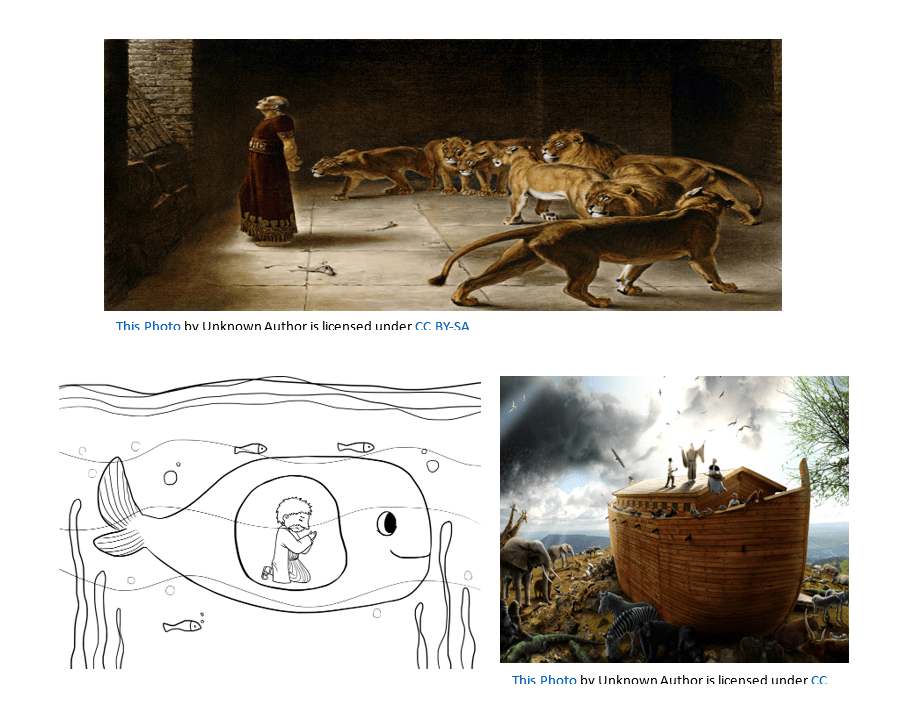
Daniel in the Lions’ Den (Daniel 6)
Scripture (Daniel 6:1-28 ESV):
It pleased Darius to set over the kingdom 120 satraps, to be throughout the whole kingdom; and over them three high officials, of whom Daniel was one, to whom these satraps should give account, so that the king might suffer no loss. Then this Daniel became distinguished above all the other high officials and satraps, because an excellent spirit was in him. And the king planned to set him over the whole kingdom. Then the high officials and the satraps sought to find a ground for complaint against Daniel with regard to the kingdom, but they could find no ground for complaint or any fault, because he was faithful, and no error or fault was found in him. Then these men said, “We shall not find any ground for complaint against this Daniel unless we find it in connection with the law of his God.”

Then these high officials and satraps came by agreement to the king and said to him, “O King Darius, live forever! All the high officials of the kingdom, the prefects and the satraps, the counselors and the governors are agreed that the king should establish an ordinance and enforce an injunction, that whoever makes petition to any god or man for thirty days, except to you, O king, shall be cast into the den of lions. Now, O king, establish the injunction and sign the document, so that it cannot be changed, according to the law of the Medes and the Persians, which cannot be revoked.” Therefore King Darius signed the document and injunction.

When Daniel knew that the document had been signed, he went to his house where he had windows in his upper chamber open toward Jerusalem. He got down on his knees three times a day and prayed and gave thanks before his God, as he had done previously. Then these men came by agreement and found Daniel making petition and plea before his God. Then they came near and said before the king, concerning the injunction, “O king! Did you not sign an injunction, that anyone who makes petition to any god or man within thirty days except to you, O king, shall be cast into the den of lions?” The king answered and said, “The thing stands fast, according to the law of the Medes and Persians, which cannot be revoked.” Then they answered and said before the king, “Daniel, who is one of the exiles from Judah, pays no attention to you, O king, or the injunction you have signed, but makes his petition three times a day.”

Then the king, when he heard these words, was much distressed and set his mind to deliver Daniel. And he labored till the sun went down to rescue him. Then these men came by agreement to the king and said to the king, “Know, O king, that it is a law of the Medes and Persians that no injunction or ordinance that the king establishes can be changed.”

Then the king commanded, and Daniel was brought and cast into the den of lions. The king declared to Daniel, “May your God, whom you serve continually, deliver you!” And a stone was brought and laid on the mouth of the den, and the king sealed it with his own signet and with the signet of his lords, that nothing might be changed concerning Daniel.

Then the king went to his palace and spent the night fasting; no diversions were brought to him, and sleep fled from him.

Then, at break of day, the king arose and went in haste to the den of lions. As he came near to the den where Daniel was, he cried out in a tone of anguish. The king declared to Daniel, “O Daniel, servant of the living God, has your God, whom you serve continually, been able to deliver you from the lions?” Then Daniel said to the king, “O king, live forever! My God sent his angel and shut the lions' mouths, and they have not harmed me, because I was found blameless before him; and also before you, O king, I have done no harm.” Then the king was exceedingly glad, and commanded that Daniel be taken up out of the den. So Daniel was taken up out of the den, and no kind of harm was found on him, because he had trusted in his God.

And the king commanded, and those men who had maliciously accused Daniel were brought and cast into the den of lions—they, their children, and their wives. And before they reached the bottom of the den, the lions overpowered them and broke all their bones in pieces.

Then King Darius wrote to all the peoples, nations, and languages that dwell in all the earth: “Peace be multiplied to you. I make a decree, that in all my royal dominion people are to tremble and fear before the God of Daniel, for he is the living God, enduring forever; his kingdom shall never be destroyed, and his dominion shall be to the end. He delivers and rescues; he works signs and wonders in heaven and on earth, he who has saved Daniel from the power of the lions.”

So this Daniel prospered during the reign of Darius and the reign of Cyrus the Persian.
Story Narrative:
As I recount the story of Daniel in the lions’ den, I can’t help but be struck by the steadfastness of his faith. Daniel, a man of incredible integrity and devotion, faced an impossible situation orchestrated by jealous officials who sought his downfall. Despite the decree that praying to any god other than King Darius would result in death by lions, Daniel remained unwavering in his commitment to his God. He continued to pray openly, defying the king’s order but honoring the divine law he held sacred.
Imagine the tension as Daniel, a captive from Judah serving in a foreign land, was forcefully cast into the den of hungry lions. The stone was placed over the entrance, sealed with the king’s signet, sealing what seemed like his inevitable fate. Yet, in the midst of darkness and danger, Daniel experienced a miraculous intervention. God sent an angel to shut the mouths of the lions, sparing Daniel from harm.
When King Darius rushed to the den at dawn, anxious about Daniel’s fate, he found him unscathed. Overjoyed and humbled, the king acknowledged the power and faithfulness of Daniel’s God. This event not only secured Daniel’s safety but also served as a powerful testament to the greatness of God’s protection and provision.
C.P.R. + N.O.W. Moment:
Daniel’s experience in the lions’ den encapsulates a profound Crisis, Pivot, Rebirth moment. His crisis came when he faced the threat of death for his faith. Instead of compromising, Daniel pivoted towards God in prayer and trust. This pivot led to a remarkable rebirth—a renewed faith in God’s deliverance and an unwavering commitment to His sovereignty. Daniel’s miraculous survival became a witness to all who witnessed it, including King Darius and his court, of God’s faithfulness and power.
Reflection Q and A:
Q: How did Daniel’s faith in God influence his actions during his crisis?
A: Daniel’s faith was the cornerstone of his life. Even in the face of death, he chose obedience to God over compromise with the world. His unwavering trust in God’s protection empowered him to face his ordeal with courage and peace.
Q: What lessons can we learn from Daniel’s experience in the lions’ den?
A: Daniel’s story teaches us the importance of unwavering faith and obedience to God, even when it seems risky or dangerous. It reminds us that God honors those who trust Him completely and that He is faithful to deliver His people from any circumstance.
Q: How can we apply Daniel’s example to our own lives today?
A: Like Daniel, we can choose to prioritize our relationship with God above all else, trusting Him to protect and guide us through any trials we may face. Daniel’s story challenges us to live boldly for God, even in challenging times, knowing that He is with us and will never forsake us.
As we continue to explore the stories of Jonah and Noah, we will uncover more insights into God’s protective hand over His people and the transformative power of faith in action. Stay tuned for the next installment in this series: “Impacted by God’s Grace.”
Key Concepts with Definitions:
Insulated (Literal Definition):
Definition: Protected or shielded from external influences or harm, often by means of a barrier.
Symbolism: Represents divine protection and safeguarding by God against worldly dangers.
Scripture Reference: Psalm 91:1-2 (ESV) He who dwells in the shelter of the Most High will abide in the shadow of the Almighty. I will say to the Lord, “My refuge and my fortress, my God, in whom I trust.”
Faith (Greek – Pistis):
Definition: Trust and confidence in God’s promises and character.
Symbolism: Demonstrates reliance on God’s protection and guidance.
Scripture Reference: Hebrews 11:1 (ESV) Now faith is the assurance of things hoped for, the conviction of things not seen.
Divine Intervention:
Definition: God’s direct involvement in human affairs, often to bring about His purposes.
Symbolism: Signifies God’s sovereignty and control over circumstances.
Scripture Reference: Isaiah 41:10 (ESV) Fear not, for I am with you; be not dismayed, for I am your God; I will strengthen you, I will help you, I will uphold you with my righteous right hand.
Sovereignty (Hebrew – Ruler, Greek – Kyrios):
Definition: Supreme authority and power of God over all creation.
Symbolism: Reflects God’s ability to protect and guide His people according to His will.
Scripture Reference: Psalm 103:19 (ESV) The Lord has established his throne in the heavens, and his kingdom rules over all.
Crisis (Greek – Krisis):
Definition: A decisive or crucial moment that requires a decision or action.
Symbolism: Represents challenges or trials faced by individuals in their faith journey.
Scripture Reference: James 1:2-4 (ESV) Count it all joy, my brothers, when you meet trials of various kinds, for you know that the testing of your faith produces steadfastness. And let steadfastness have its full effect, that you may be perfect and complete, lacking in nothing.
Pivot (Literal Definition):
Definition: To turn or change direction, often in response to a new situation or perspective.
Symbolism: Signifies a shift in focus towards God and His will amidst challenges.
Scripture Reference: Proverbs 3:5-6 (ESV) Trust in the Lord with all your heart, and do not lean on your own understanding. In all your ways acknowledge him, and he will make straight your paths.
Rebirth (Greek – Anagennao):
Definition: Spiritual renewal or transformation, often after a period of difficulty or change.
Symbolism: Represents a fresh start or new beginning in one’s faith journey.
Scripture Reference: 2 Corinthians 5:17 (ESV) Therefore, if anyone is in Christ, he is a new creation. The old has passed away; behold, the new has come.
Witness (Greek – Martus):
Definition: A person who testifies to the truth of God’s work and presence.
Symbolism: Demonstrates the impact of God’s protection and faithfulness on the lives of believers.
Scripture Reference: Acts 1:8 (ESV) But you will receive power when the Holy Spirit has come upon you, and you will be my witness.
Walking in Daniel’s Shoes: A Personal Testimony
As I reflect on the story of Daniel in the lions’ den, I am struck by its relevance and profound lessons for our lives in the 21st century. Daniel’s unwavering faith and courage in the face of adversity stand as a timeless example of how God’s protection and sovereignty transcend any challenge we may encounter.
Relevance in Contemporary Society:
In today’s fast-paced and often tumultuous world, the story of Daniel resonates deeply. It speaks to the reality of standing firm in our faith amidst cultural pressures, political complexities, and personal challenges. Daniel faced a society that demanded conformity, yet he remained steadfast in his devotion to God. His commitment to prayer and obedience to God’s law, even at the risk of his life, challenges us to consider where our allegiances lie and how we respond to adversity.
Walking in Daniel’s Shoes:
Walking in Daniel’s shoes means embracing faith that is not merely a cultural label but a deep-seated trust in God’s promises and character. It involves:
Prayerful Dependence: Emulating Daniel’s disciplined prayer life, I seek to prioritize communion with God daily. Just as Daniel prayed openly despite the threat of persecution, I strive to maintain an intimate relationship with God through prayer, seeking His guidance and strength. Scripture Reference: Daniel 6:10 (ESV) When Daniel knew that the document had been signed, he went to his house where he had windows in his upper chamber open toward Jerusalem. He got down on his knees three times a day and prayed and gave thanks before his God, as he had done previously.
Uncompromising Integrity: Like Daniel, I aim to uphold biblical principles and moral integrity in every aspect of my life. In a world where compromise is often encouraged, Daniel’s example challenges me to stand firm in my convictions, trusting that God’s truth prevails. Scripture Reference: Daniel 6:22 (ESV) My God sent his angel and shut the lions' mouths, and they have not harmed me, because I was found blameless before him; and also before you, O king, I have done no harm.
Courageous Witness: Daniel’s fearless testimony before King Darius and the entire kingdom serves as a model of courageous witness. In my interactions with others, I seek to boldly proclaim God’s goodness and faithfulness, knowing that my life is a testament to His grace and mercy. Scripture Reference: Daniel 6:27-28 (ESV) He delivers and rescues; he works signs and wonders in heaven and on earth, he who has saved Daniel from the power of the lions. So this Daniel prospered during the reign of Darius and the reign of Cyrus the Persian.
Realizing God’s Insulation:
Through Daniel’s story, I realize that God insulates me today through His Word, love, grace, mercy, and truth. His Word provides me with wisdom and guidance in navigating life’s challenges. His love and grace assure me of His unfailing presence and provision, even in the midst of difficulties. His mercy offers forgiveness and restoration when I fall short. His truth anchors my faith, reminding me of His promises and sovereignty over every circumstance.
As I walk in Daniel’s shoes on my faith journey today, I am encouraged to trust in God’s protection and to remain steadfast in His truth. Just as He insulated Daniel from harm in the lions’ den, I believe He continues to shield and uphold me through His unchanging love and faithfulness.
May Daniel’s example inspire us all to live with unwavering faith and courage, knowing that God’s insulation is our steadfast assurance in every season of life.
Chapter 1: Impacted by God’s Grace
Article Two: Jonah and the Big Fish
In this chapter, we continue our exploration of individuals impacted by God’s grace amidst challenging circumstances. Jonah’s journey with the big fish illustrates profound truths about God’s sovereignty, mercy, and the transformative power of obedience.
Jonah and the Big Fish (Jonah 1-4)
Scripture (Jonah 1:1-17 ESV):
Now the word of the Lord came to Jonah the son of Amittai, saying, “Arise, go to Nineveh, that great city, and call out against it, for their evil has come up before me.” But Jonah rose to flee to Tarshish from the presence of the Lord. He went down to Joppa and found a ship going to Tarshish. So he paid the fare and went down into it, to go with them to Tarshish, away from the presence of the Lord.

But the Lord hurled a great wind upon the sea, and there was a mighty tempest on the sea, so that the ship threatened to break up. Then the mariners were afraid, and each cried out to his god. And they hurled the cargo that was in the ship into the sea to lighten it for them. But Jonah had gone down into the inner part of the ship and had lain down and was fast asleep. So the captain came and said to him, “What do you mean, you sleeper? Arise, call out to your god! Perhaps the god will give a thought to us, that we may not perish.”

And they said to one another, “Come, let us cast lots, that we may know on whose account this evil has come upon us.” So they cast lots, and the lot fell on Jonah. Then they said to him, “Tell us on whose account this evil has come upon us. What is your occupation? And where do you come from? What is your country? And of what people are you?” And he said to them, “I am a Hebrew, and I fear the Lord, the God of heaven, who made the sea and the dry land.” Then the men were exceedingly afraid and said to him, “What is this that you have done!” For the men knew that he was fleeing from the presence of the Lord, because he had told them.

Then they said to him, “What shall we do to you, that the sea may quiet down for us?” For the sea grew more and more tempestuous. He said to them, “Pick me up and hurl me into the sea; then the sea will quiet down for you, for I know it is because of me that this great tempest has come upon you.” Nevertheless, the men rowed hard to get back to dry land, but they could not, for the sea grew more and more tempestuous against them. Therefore they called out to the Lord, “O Lord, let us not perish for this man's life, and lay not on us innocent blood, for you, O Lord, have done as it pleased you.” So they picked up Jonah and hurled him into the sea, and the sea ceased from its raging. Then the men feared the Lord exceedingly, and they offered a sacrifice to the Lord and made vows.

And the Lord appointed a great fish to swallow up Jonah. And Jonah was in the belly of the fish three days and three nights.
Scripture (Jonah 2:1-10 ESV):
Then Jonah prayed to the Lord his God from the belly of the fish, saying,

“I called out to the Lord, out of my distress,
    and he answered me;
out of the belly of Sheol I cried,
    and you heard my voice.
For you cast me into the deep,
    into the heart of the seas,
    and the flood surrounded me;
all your waves and your billows
    passed over me.
Then I said, ‘I am driven away
    from your sight;
yet I shall again look
    upon your holy temple.’
The waters closed in over me to take my life;
    the deep surrounded me;
weeds were wrapped about my head
    at the roots of the mountains.
I went down to the land
    whose bars closed upon me forever;
yet you brought up my life from the pit,
    O Lord my God.
When my life was fainting away,
    I remembered the Lord,
and my prayer came to you,
    into your holy temple.
Those who pay regard to vain idols
    forsake their hope of steadfast love.
But I with the voice of thanksgiving
    will sacrifice to you;
what I have vowed I will pay.
    Salvation belongs to the Lord!”

And the Lord spoke to the fish, and it vomited Jonah out upon the dry land.
Scripture (Jonah 3:1-10 ESV):
Then the word of the Lord came to Jonah the second time, saying, “Arise, go to Nineveh, that great city, and call out against it the message that I tell you.” So Jonah arose and went to Nineveh, according to the word of the Lord. Now Nineveh was an exceedingly great city, three days' journey in breadth. Jonah began to go into the city, going a day's journey. And he called out, “Yet forty days, and Nineveh shall be overthrown!” And the people of Nineveh believed God. They called for a fast and put on sackcloth, from the greatest of them to the least of them.

The word reached the king of Nineveh, and he arose from his throne, removed his robe, covered himself with sackcloth, and sat in ashes. And he issued a proclamation and published through Nineveh, “By the decree of the king and his nobles: Let neither man nor beast, herd nor flock, taste anything. Let them not feed or drink water, but let man and beast be covered with sackcloth, and let them call out mightily to God. Let everyone turn from his evil way and from the violence that is in his hands. Who knows? God may turn and relent and turn from his fierce anger, so that we may not perish.”

When God saw what they did, how they turned from their evil way, God relented of the disaster that he had said he would do to them, and he did not do it.
Scripture (Jonah 4:1-11 ESV):
But it displeased Jonah exceedingly, and he was angry. And he prayed to the Lord and said, “O Lord, is not this what I said when I was yet in my country? That is why I made haste to flee to Tarshish; for I knew that you are a gracious God and merciful, slow to anger and abounding in steadfast love, and relenting from disaster. Therefore now, O Lord, please take my life from me, for it is better for me to die than to live.” And the Lord said, “Do you do well to be angry?”

Jonah went out of the city and sat to the east of the city and made a booth for himself there. He sat under it in the shade, till he should see what would become of the city. Now the Lord God appointed a plant and made it come up over Jonah, that it might be a shade over his head, to save him from his discomfort. So Jonah was exceedingly glad because of the plant. But when dawn came up the next day, God appointed a worm that attacked the plant, so that it withered. When the sun rose, God appointed a scorching east wind, and the sun beat down on the head of Jonah so that he was faint. And he asked that he might die and said, “It is better for me to die than to live.” But God said to Jonah, “Do you do well to be angry for the plant?” And he said, “Yes, I do well to be angry, angry enough to die.” And the Lord said, “You pity the plant, for which you did not labor, nor did you make it grow, which came into being in a night and perished in a night. And should not I pity Nineveh, that great city, in which there are more than 120,000 persons who do not know their right hand from their left, and also much cattle?”
Story Narrative:
As I walk in Jonah’s shoes through his remarkable journey with the big fish, I am reminded of the profound grace and mercy of God that reaches even the most reluctant hearts. Jonah, a prophet called to proclaim judgment on Nineveh, initially chose to flee from God’s command. His disobedience led him into a tempestuous sea, where God demonstrated His sovereignty over creation by sending a great fish to swallow Jonah and preserve his life.
In the belly of the fish, Jonah experienced a transformative period of prayer and repentance. He acknowledged God’s hand in his salvation and vowed to fulfill his calling. Miraculously, God commanded the fish to release Jonah onto dry land, reaffirming His authority over all circumstances.
Upon receiving a second chance from God, Jonah obeyed and preached a message of repentance to the people of Nineveh. To his surprise, the entire city, from the king to the humblest citizen, repented and turned to God. God, in His compassion, forgave Nineveh and withheld the judgment Jonah had proclaimed.
Yet, Jonah’s journey did not end with celebration. He struggled with anger and resentment towards God’s mercy upon Nineveh, revealing his own reluctance to embrace God’s grace towards his enemies. Through a lesson with a plant and a worm, God taught Jonah about His compassion for all humanity, urging him to align his heart with God’s purposes.
C.P.R. + N.O.W. Moment:
Question 1: How did Jonah’s experience in the belly of the fish serve as a Crisis, Pivot, Rebirth (C.P.R.) moment in his life?
Answer: Jonah’s time in the belly of the fish was a crisis moment brought on by his disobedience. It served as a pivotal moment where he turned back to God in repentance. This rebirth moment transformed his perspective and renewed his commitment to fulfill God’s calling, leading him to obey God’s command to go to Nineveh.
Question 2: What role did Jonah’s prayer play in his N.O.W. (New-Beginnings is Our Witness) moment after being vomited onto dry land?
Answer: Jonah’s prayer from the belly of the fish was a pivotal moment of connection with God. It was in this moment of desperation and humility that Jonah experienced God’s deliverance and renewed purpose. His prayer of thanksgiving and vow to God marked the beginning of a new chapter in his life, where he embraced his role as a prophet once again.
Question 3: How can Jonah’s journey from disobedience to obedience inspire us in our own spiritual journey today?
Answer: Jonah’s journey teaches us that even in our moments of disobedience and reluctance, God’s grace is abundant. His story encourages us to trust in God’s sovereignty, to repent when we stray from His will, and to boldly obey His commands. Jonah’s experience reminds us that God can use imperfect vessels like us to accomplish His purposes and bring about transformative change in the lives of others.
Reflection Q and A:
Q1: How does Jonah’s initial disobedience resonate with times when we have resisted God’s will in our lives?
A1: Jonah’s initial disobedience reminds us of our own tendencies to resist God’s will when it conflicts with our desires or understanding. It challenges us to examine areas in our lives where we may be running from God’s call and prompts us to repent and realign our hearts with His purposes.
Q2: What does Jonah’s prayer of thanksgiving teach us about cultivating a heart of gratitude in difficult circumstances?
A2: Jonah’s prayer of thanksgiving from the belly of the fish teaches us that gratitude is a powerful response in times of trial. It encourages us to look beyond our circumstances and acknowledge God’s presence and provision, even in the midst of adversity.
Q3: How can Jonah’s experience with the plant and worm deepen our understanding of God’s compassion and sovereignty?
A3: Jonah’s experience with the plant and worm illustrates God’s compassionate concern for both Jonah and the people of Nineveh. It challenges us to recognize God’s sovereignty over all creation, including our own lives, and to trust His wisdom and purposes even when they differ from our own expectations.
Key Concepts with Definitions:
Grace (Hebrew: חֵסֵד, chesed): God’s unmerited favor and kindness towards humanity, demonstrated in His forgiveness and mercy, as seen in Jonah’s redemption and the salvation of Nineveh. Scripture Reference: Jonah 2:9 (ESV) But I with the voice of thanksgiving will sacrifice to you; what I have vowed I will pay. Salvation belongs to the Lord!
Repentance (Greek: μετάνοια, metanoia): The act of turning away from sin and turning towards God, exemplified by Jonah’s prayer of repentance in the belly of the fish and the response of the people of Nineveh. Scripture Reference: Jonah 3:10 (ESV) When God saw what they did, how they turned from their evil way, God relented of the disaster that he had said he would do to them, and he did not do it.
Sovereignty (Hebrew: יהוה, Yahweh): God’s supreme authority and control over all creation, demonstrated through His command over the sea, the fish, and the repentance of Nineveh. Scripture Reference: Jonah 1:9-10 (ESV) And he said to them, “I am a Hebrew, and I fear the Lord, the God of heaven, who made the sea and the dry land.” Then the men were exceedingly afraid and said to him, “What is this that you have done!” For the men knew that he was fleeing from the presence of the Lord, because he had told them.
Obedience (Greek: υπακοή, hypakoé): Submission to God’s will and commands, despite personal desires or circumstances, illustrated in Jonah’s eventual obedience to go to Nineveh. Scripture Reference: Jonah 3:3 (ESV) So Jonah arose and went to Nineveh, according to the word of the Lord.
Compassion (Hebrew: רַחֲמִים, rachamim): God’s deep sympathy and concern for human suffering, demonstrated in His mercy towards Jonah in the fish and towards Nineveh despite their wickedness. Scripture Reference: Jonah 4:11 (ESV) And should not I pity Nineveh, that great city, in which there are more than 120,000 persons who do not know their right hand from their left, and also much cattle?
Repentance (Hebrew: שׁוּב, shuv): Turning away from sin and returning to God, exemplified in Jonah’s prayer of repentance from the belly of the fish. Scripture Reference: Jonah 2:9 (ESV) But I with the voice of thanksgiving will sacrifice to you; what I have vowed I will pay. Salvation belongs to the Lord!
Mercy (Hebrew: רַחֲמִים, rachamim): God’s compassionate treatment of humanity, demonstrated in His forgiveness towards the repentant people of Nineveh. Scripture Reference: Jonah 4:2 (ESV) O Lord, is not this what I said when I was yet in my country? That is why I made haste to flee to Tarshish; for I knew that you are a gracious God and merciful, slow to anger and abounding in steadfast love, and relenting from disaster.
Compassion (Hebrew: רַחוּם, rachum): Deep empathy and concern for the suffering of others, illustrated in God’s concern for the people of Nineveh despite their wickedness. Scripture Reference: Jonah 4:11 (ESV) And should not I pity Nineveh, that great city, in which there are more than 120,000 persons who do not know their right hand from their left, and also much cattle?
Walking in Jonah’s Shoes: A Personal Testimony
Relevance in Contemporary Society:
Jonah’s story is profoundly relevant in today’s world, where many struggle with obedience and forgiveness. It challenges us to examine our hearts and confront our reluctance to follow God’s will wholeheartedly. Just as Jonah faced consequences for his disobedience yet experienced God’s redemptive grace, we too are called to trust in God’s sovereignty over our lives.
Walking in Jonah’s Shoes:
Walking in Jonah’s shoes means embracing repentance and obedience as pathways to experiencing God’s transformative grace:
Prayerful Dependence: Like Jonah, I seek to cultivate a prayerful dependence on God, acknowledging His sovereignty and seeking His guidance daily. Scripture Reference: Jonah 2:2 (ESV) I called out to the Lord, out of my distress, and he answered me; out of the belly of Sheol I cried, and you heard my voice.
Embracing God’s Compassion: Jonah’s struggle with God’s compassion towards Nineveh challenges me to extend grace and compassion to others, even those I find difficult to forgive. Scripture Reference: Jonah 4:2 (ESV) O Lord, is not this what I said when I was yet in my country? That is why I made haste to flee to Tarshish; for I knew that you are a gracious God and merciful, slow to anger and abounding in steadfast love, and relenting from disaster.
Courageous Witness: Jonah’s obedience eventually led to the repentance of an entire city. I am inspired to boldly share God’s message of redemption and hope with those around me, trusting in His power to transform lives. Scripture Reference: Jonah 3:5 (ESV) And the people of Nineveh believed God. They called for a fast and put on sackcloth, from the greatest of them to the least of them.
Realizing God’s Insulation:
Through Jonah’s story, I realize that God insulates me today through His grace, mercy, and sovereign plan. His grace offers forgiveness and restoration when I repent. His mercy provides comfort and strength in times of trial. His sovereignty assures me that His purposes prevail despite my circumstances.
As I walk in Jonah’s shoes on my faith journey today, I am challenged to trust in God’s guidance, embrace His compassion for others, and boldly proclaim His message of salvation. Just as God used Jonah’s obedience to bring about transformation in Nineveh, I believe He continues to work through obedient hearts to bring His kingdom on earth as it is in heaven.
May Jonah’s journey inspire us to trust in God’s sovereignty and grace, and to faithfully follow His call in our lives.
Chapter 1: Influenced by God’s Faithfulness
Article Three: Noah and the Ark
In this chapter, we explore the story of Noah and the Ark, a testament to God’s faithfulness amidst human disobedience and His covenant-keeping nature.
Noah and the Ark (Genesis 6-9)
Scripture (Genesis 6:5-22 ESV):
The Lord saw that the wickedness of man was great in the earth, and that every intention of the thoughts of his heart was only evil continually. And the Lord regretted that he had made man on the earth, and it grieved him to his heart. So the Lord said, “I will blot out man whom I have created from the face of the land, man and animals and creeping things and birds of the heavens, for I am sorry that I have made them.” But Noah found favor in the eyes of the Lord.

These are the generations of Noah. Noah was a righteous man, blameless in his generation. Noah walked with God. And Noah had three sons, Shem, Ham, and Japheth.

Now the earth was corrupt in God's sight, and the earth was filled with violence. And God saw the earth, and behold, it was corrupt, for all flesh had corrupted their way on the earth. And God said to Noah, “I have determined to make an end of all flesh, for the earth is filled with violence through them. Behold, I will destroy them with the earth. Make yourself an ark of gopher wood. Make rooms in the ark, and cover it inside and out with pitch. This is how you are to make it: the length of the ark 300 cubits, its breadth 50 cubits, and its height 30 cubits. Make a roof for the ark, and finish it to a cubit above, and set the door of the ark in its side. Make it with lower, second, and third decks. For behold, I will bring a flood of waters upon the earth to destroy all flesh in which is the breath of life under heaven. Everything that is on the earth shall die. But I will establish my covenant with you, and you shall come into the ark, you, your sons, your wife, and your sons' wives with you. And of every living thing of all flesh, you shall bring two of every sort into the ark to keep them alive with you. They shall be male and female. Of the birds according to their kinds, and of the animals according to their kinds, of every creeping thing of the ground, according to its kind, two of every sort shall come in to you to keep them alive. Also take with you every sort of food that is eaten, and store it up. It shall serve as food for you and for them.” Noah did this; he did all that God commanded him.
Scripture (Genesis 7:1-24 ESV):
Then the Lord said to Noah, “Go into the ark, you and all your household, for I have seen that you are righteous before me in this generation. Take with you seven pairs of all clean animals, the male and his mate, and a pair of the animals that are not clean, the male and his mate, and seven pairs of the birds of the heavens also, male and female, to keep their offspring alive on the face of all the earth. For in seven days I will send rain on the earth forty days and forty nights, and every living thing that I have made I will blot out from the face of the ground.” And Noah did all that the Lord had commanded him.

Noah was six hundred years old when the flood of waters came upon the earth. And Noah and his sons and his wife and his sons' wives with him went into the ark to escape the waters of the flood. Of clean animals, and of animals that are not clean, and of birds, and of everything that creeps on the ground, two and two, male and female, went into the ark with Noah, as God had commanded Noah. And after seven days the waters of the flood came upon the earth.

In the six hundredth year of Noah's life, in the second month, on the seventeenth day of the month, on that day all the fountains of the great deep burst forth, and the windows of the heavens were opened. And rain fell upon the earth forty days and forty nights. On the very same day Noah and his sons, Shem and Ham and Japheth, and Noah's wife and the three wives of his sons with them entered the ark, they and every beast, according to its kind, and all the livestock according to their kinds, and every creeping thing that creeps on the earth, according to its kind, and every bird, according to its kind, every winged creature. They went into the ark with Noah, two and two of all flesh in which there was the breath of life. And those that entered, male and female of all flesh, went in as God had commanded him. And the Lord shut him in.

The flood continued forty days on the earth. The waters increased and bore up the ark, and it rose high above the earth. The waters prevailed and increased greatly on the earth, and the ark floated on the face of the waters. And the waters prevailed so mightily on the earth that all the high mountains under the whole heaven were covered. The waters prevailed above the mountains, covering them fifteen cubits deep. And all flesh died that moved on the earth, birds, livestock, beasts, all swarming creatures that swarm on the earth, and all mankind. Everything on the dry land in whose nostrils was the breath of life died. He blotted out every living thing that was on the face of the ground, man and animals and creeping things and birds of the heavens. They were blotted out from the earth. Only Noah was left, and those who were with him in the ark. And the waters prevailed on the earth 150 days.
Scripture (Genesis 8:1-22 ESV):
But God remembered Noah and all the beasts and all the livestock that were with him in the ark. And God made a wind blow over the earth, and the waters subsided. The fountains of the deep and the windows of the heavens were closed, the rain from the heavens was restrained, and the waters receded from the earth continually. At the end of 150 days the waters had abated, and in the seventh month, on the seventeenth day of the month, the ark came to rest on the mountains of Ararat. And the waters continued to abate until the tenth month; in the tenth month, on the first day of the month, the tops of the mountains were seen.

At the end of forty days Noah opened the window of the ark that he had made and sent forth a raven. It went to and fro until the waters were dried up from the earth. Then he sent forth a dove from him, to see if the waters had subsided from the face of the ground. But the dove found no place to set her foot, and she returned to him to the ark, for the waters were still on the face of the whole earth. So he put out his hand and took her and brought her into the ark with him. He waited another seven days, and again he sent forth the dove out of the ark. And the dove came back to him in the evening, and behold, in her mouth was a freshly plucked olive leaf. So Noah knew that the waters had subsided from the earth. Then he waited another seven days and sent forth the dove, and she did not return to him anymore.

In the six hundred and first year, in the first month, the first day of the month, the waters were dried from off the earth. And Noah removed the covering of the ark and looked, and behold, the face of the ground was dry. In the second month, on the twenty-seventh day of the month, the earth had dried out. Then God said to Noah, “Go out from the ark, you and your wife, and your sons and your sons' wives with you. Bring out with you every living thing that is with you of all flesh—birds and animals and every creeping thing that creeps on the earth—that they may swarm on the earth, and be fruitful and multiply on the earth.” So Noah went out, and his sons and his wife and his sons' wives with him. Every beast, every creeping thing, and every bird, everything that moves on the earth, went out by families from the ark.
Scripture (Genesis 9:1-17 ESV):
And God blessed Noah and his sons and said to them, “Be fruitful and multiply and fill the earth. The fear of you and the dread of you shall be upon every beast of the earth and upon every bird of the heavens, upon everything that creeps on the ground and all the fish of the sea. Into your hand they are delivered. Every moving thing that lives shall be food for you. And as I gave you the green plants, I give you everything. But you shall not eat flesh with its life, that is, its blood. And for your lifeblood I will require a reckoning: from every beast I will require it and from man. From his fellow man I will require a reckoning for the life of man.

“Whoever sheds the blood of man,
    by man shall his blood be shed,
for God made man in his own image.

And you, be fruitful and multiply, increase greatly on the earth and multiply in it.”

Then God said to Noah and to his sons with him, “Behold, I establish my covenant with you and your offspring after you, and with every living creature that is with you, the birds, the livestock, and every beast of the earth with you, as many as came out of the ark; it is for every beast of the earth. I establish my covenant with you, that never again shall all flesh be cut off by the waters of the flood, and never again shall there be a flood to destroy the earth.” And God said, “This is the sign of the covenant that I make between me and you and every living creature that is with you, for all future generations: I have set my bow in the cloud, and it shall be a sign of the covenant between me and the earth. When I bring clouds over the earth and the bow is seen in the clouds, I will remember my covenant that is between me and you and every living creature of all flesh. And the waters shall never again become a flood to destroy all flesh. When the bow is in the clouds, I will see it and remember the everlasting covenant between God and every living creature of all flesh that is on the earth.” God said to Noah, “This is the sign of the covenant that I have established between me and all flesh that is on the earth.”
Story Narrative Section: Noah and the Ark
In a time when wickedness and corruption filled the earth, Noah stood out as a righteous and blameless man who walked with God. God, grieved by the state of humanity, resolved to bring judgment upon the earth through a great flood. Yet, in His mercy, God chose Noah to preserve a remnant of creation.
God instructed Noah to build an ark, providing detailed specifications for its construction. Despite facing ridicule and disbelief from his contemporaries, Noah obediently followed God’s commands, diligently constructing the ark over many years. This act of faith was a testament to Noah’s trust in God’s word and his commitment to righteousness.
As the floodwaters deluged the earth, Noah and his family, along with pairs of every kind of animal, found refuge in the ark. For forty days and nights, rain poured from the heavens, and the fountains of the deep burst forth, covering the entire earth in water. Only those aboard the ark survived the catastrophic flood.
After the floodwaters receded, the ark came to rest on the mountains of Ararat, and Noah sent out a raven and a dove to find dry land. When the dove returned with an olive leaf in its beak, Noah knew that the waters had subsided. God remembered Noah and made a covenant with him, promising never again to destroy the earth by flood. The rainbow became a sign of this covenant—a reminder of God’s faithfulness and mercy.
Key Concepts with Definitions:
Faithfulness (Hebrew: אֱמוּנָה, emunah): God’s unwavering commitment to His promises, exemplified in His preservation of Noah and his family through the flood. Scripture Reference: Genesis 6:8 (ESV) But Noah found favor in the eyes of the Lord.
Covenant (Hebrew: בְּרִית, berit): A sacred agreement between God and His people, marked by promises and obligations, as seen in the covenant God made with Noah after the flood. Scripture Reference: Genesis 9:9-11 (ESV) “Behold, I establish my covenant with you and your offspring after you, and with every living creature that is with you, the birds, the livestock, and every beast of the earth with you, as many as came out of the ark; it is for every beast of the earth. I establish my covenant with you, that never again shall all flesh be cut off by the waters of the flood, and never again shall there be a flood to destroy the earth.”
Grace (Greek: χάρις, charis): God’s unmerited favor and kindness towards humanity, demonstrated in His choice to save Noah and his family. Scripture Reference: Genesis 6:8 (ESV) But Noah found favor in the eyes of the Lord.
Obedience (Hebrew: שְׁמַע, shema): Willing submission to God’s commands and will, illustrated in Noah’s faithful obedience to build the ark. Scripture Reference: Genesis 6:22 (ESV) Noah did this; he did all that God commanded him.
Renewal (Greek: ἀνακαίνωσις, anakainosis): God’s act of restoring and refreshing His creation, exemplified in the renewal of the earth after the flood. Scripture Reference: Genesis 8:13-14 (ESV) In the six hundred and first year, in the first month, the first day of the month, the waters were dried from off the earth. And Noah removed the covering of the ark and looked, and behold, the face of the ground was dry.
Righteousness (Hebrew: צַדִּיק, tsaddiq): Moral integrity and blamelessness before God, as exemplified by Noah in his generation. Scripture Reference: Genesis 6:9 (ESV) These are the generations of Noah. Noah was a righteous man, blameless in his generation. Noah walked with God.
Restoration (Hebrew: שִׁבְתָה, shibatah): The act of renewing and rebuilding, seen in God’s restoration of the earth after the flood. Scripture Reference: Genesis 8:1 (ESV) But God remembered Noah and all the beasts and all the livestock that were with him in the ark. And God made a wind blow over the earth, and the waters subsided.
Promise (Hebrew: עָלָה, alah): A declaration of God’s intent or commitment, illustrated in God’s covenant with Noah and all living creatures. Scripture Reference: Genesis 9:11 (ESV) I establish my covenant with you, that never again shall all flesh be cut off by the water
Walking in Noah’s Shoes: A Personal Testimony
Relevance in Contemporary Society:
Noah’s story resonates today as a reminder of God’s faithfulness amidst global challenges and the importance of living in obedience to His word. It prompts us to reflect on our own faith journey and commitment to following God wholeheartedly.
Walking in Noah’s Shoes:
Walking in Noah’s shoes involves trusting in God’s promises, obeying His commands, and living in hope amidst adversity:
Trust in God’s Faithfulness: Like Noah, I seek to trust in God’s faithfulness in every circumstance, knowing that His promises endure through all trials and challenges. Scripture Reference: Genesis 6:22 (ESV) Noah did this; he did all that God commanded him.
Obedience to God’s Commands: Noah’s obedience to build the ark despite ridicule and doubt challenges me to obey God’s commands, even when they seem impractical or daunting. Scripture Reference: Genesis 7:5 (ESV) And Noah did all that the Lord had commanded him.
Hope in God’s Renewal: Noah’s experience of God’s renewal of the earth after the flood inspires me to hope in God’s promise of renewal and restoration in my own life and in the world. Scripture Reference: Genesis 8:22 (ESV) While the earth remains, seedtime and harvest, cold and heat, summer and winter, day and night, shall not cease.
Realizing God’s Insulation:
Through Noah’s story, I realize that God insulates me today through His faithfulness, grace, and covenant promises. His faithfulness ensures that His plans for me are for good and not for harm, to give me a future and a hope (Jeremiah 29:11).
As I walk in Noah’s shoes on my faith journey today, I am challenged to trust in God’s promises, obey His commands, and live in hopeful expectation of His renewal and restoration. Just as God preserved Noah and his family through the flood, I believe He continues to preserve and protect me through life’s storms, guiding me towards His purposes.
C.P.R. + N.O.W. Moment:
Question 1: How did Noah demonstrate Crisis, Pivot, Rebirth (C.P.R.) during the building of the ark and the flood?
Answer: Noah faced the crisis of building an ark amidst ridicule and disbelief from others. His pivot came when he chose to obey God’s command despite the challenges, leading to the rebirth of humanity and creation after the flood.
Question 2: What role did Noah’s faith play in his N.O.W. (New-Beginnings is Our Witness) moment after the floodwaters receded?
Answer: Noah’s faith in God’s promise sustained him through the flood and gave him hope for a new beginning. His obedience to God’s command to leave the ark marked the beginning of a new chapter in which he and his family became witnesses of God’s faithfulness.
Question 3: How does Noah’s covenant with God symbolize God’s enduring relationship with humanity?
Answer: Noah’s covenant with God, marked by the rainbow, symbolizes God’s enduring commitment to never again destroy the earth with a flood. It demonstrates His faithfulness and grace towards humanity, offering us a glimpse of His redemptive plan through Jesus Christ.
Reflection Q and A:
Q1: In what ways does Noah’s obedience challenge us to trust and obey God’s commands in our own lives?
A1: Noah’s obedience challenges us to trust God’s wisdom and obey His commands, even when they go against popular opinion or seem impractical. It encourages us to have faith in God’s promises and His faithfulness to fulfill them.
Q2: How can Noah’s experience with the ark and the flood inspire us to persevere through challenges and trust in God’s provision?
A2: Noah’s experience with the ark and the flood reminds us that God provides for those who trust in Him. It inspires us to persevere through challenges, knowing that God is faithful to His promises and will see us through difficult times.
Q3: What does the covenant God made with Noah teach us about God’s character and His relationship with humanity?
A3: The covenant God made with Noah reveals God’s character of faithfulness, grace, and love towards humanity. It assures us of His enduring commitment to His creation and His desire to restore and renew all things according to His perfect plan.
Closing Prayer:
Gracious God,
We thank you for the stories of Daniel, Jonah, and Noah, which remind us of your unwavering protection and faithfulness. Like Daniel, may we trust in you amidst our trials, knowing that you are our refuge and fortress. Like Jonah, may we repent and turn towards your mercy when we stray from your will. Like Noah, may we obediently follow your commands, even in the face of ridicule and doubt, knowing that you will sustain us through every storm.
Lord, help us to embrace each crisis as an opportunity to pivot towards you, experiencing true rebirth and becoming witnesses of your glory. May our lives reflect your sovereignty and love, shining as beacons of hope and faith in a world that desperately needs your light.
In Jesus’ name we pray, Amen.
As we conclude this journey through the lives of these remarkable individuals, may their stories continue to resonate in our hearts and minds. Let us remember that God’s faithfulness endures through all circumstances, and He invites us to trust Him completely. Thank you for joining me on this journey of faith and courage.
Salvation Message and Next Steps
If you desire to begin or renew a relationship with Jesus Christ, you can pray this prayer:
Salvation Prayer:
Dear Lord Jesus, I admit that I am a sinner and need Your forgiveness. I believe that You died for my sins and rose from the dead. I invite You to come into my heart and life. I trust and follow You as my Lord and Savior. Thank You for saving me and giving me eternal life. Amen.
Next Steps:
Read the Bible daily to grow in your relationship with God.
Pray regularly to communicate with God and seek His guidance.
Join a local church to connect with other believers and grow together in faith.
Share your faith with others by telling them about Jesus and His love.
Thank you for journeying with us on this path of discovery and faith!
With joy and gratitude,
Miriam aka Essence of Myrrh Proverbs 3:5-8
🌟 Please DO Share this: Message, Bookmark the site, Comment on the POST, Like the information, and Subscribe to continue to get updates. Thank you for stopping by as I am a work in progress walking out / typing out my purpose along my life’s journey. Selah and Shalom ~ Miriam aka Essence of Myrrh Proverbs 3:5-8 🌟
How can you …Stay Connected?
As we continue on this journey together, I invite you to stay connected with The Thankful Revolution community. Follow us on Instagram and Facebook for daily encouragement and updates. Check out our YouTube channel for more inspiring content and subscribe to our newsletter for the latest news and insights.
Explore more about “Insulated, Impacted, Influencer” and related topics in our latest blog post. Dive deeper into these themes and join the conversation.
Thank you for joining me on this uplifting adventure. Remember, every twist and turn is an opportunity to grow closer to God and experience His goodness. Embrace the unexpected with faith and joy!
The Thankful Revolution rejoices with you and looks forward to continuing to encourage, edify, educate, and inspire as we traverse along our life’s pathway and choices. Enjoy the journey! Shalom to all!
Let’s start living our best life N.O.W. = New-Beginnings is OUR Witness!TRUST God to help you navigate through your life’s journey into a vitalized and healthy destination!
Continue to stay tuned for more on the meaning of LIFE as we explore Biblical Truths one word at a time, one scripture at a time, one moment in time, …let’s eat that daily bread! Selah, Shalom, Amen Indeed Miriam a.k.a. Essence of Myrrh Proverbs 3:5-8 (TIME for a next-level New-Beginning)! We would be honored if you do Subscribe, Bookmark, Save, Share, Comment, Like, and Enjoy how N.O.W. = New-Beginnings is our Witness can be yours today through one daily Myrrhism Word/Message at a time.
Psalm 37:23, “The steps of a good man are ordered by the Lord: and he delighted in his way.”
P.S. Remember, to help us navigate through this life and enjoy a new life that one being eternal with God our Father; we have to make a decision N.O.W. = New Beginnings is our Witness. Above provides a prayer that you can ask the Lord to become your Redeemer, Healer, Savior, your everything to help you on your personal life’s journey – even though it may be bitter sometimes with God He always sweetens your steps. Love you always! Miriam aka Essence of Myrrh Proverbs 3:5-8.
John 10:10 The Message Version
6-10 Jesus told this simple story, but they had no idea what he was talking about. So he tried again. “I’ll be explicit, then. I am the Gate for the sheep. All those others are up to no good—sheep rustlers, every one of them. But the sheep didn’t listen to them. I am the Gate. Anyone who goes through me will be cared for—will freely go in and out, and find pasture. A thief is only there to steal and kill and destroy. I came so they can have real and eternal life, more and better life than they ever dreamed of.
Please DO Share this: Message, Bookmark the site, Comment on the POST, Like the information, and Subscribe to continue to get updates. Thank you for stopping by as I am a work in progress walking out / typing out my purpose along my life’s journey. Selah and Shalom ~ Miriam aka Essence of Myrrh Proverbs 3:5-8




 The Thankful Revolution N.O.W. Speaks!
Leave a comment